Footwear Manufacturing Insights: Boot Top-Line Design, Cut-Out Engineering, and Elastic Gusset Application
In boot manufacturing, comfort and appearance depend greatly on how the leg portion of the upper is engineered. Unlike low shoes, boots must accommodate variations in calf girth while maintaining shape, stability, and clean aesthetics.
Two important design solutions commonly used in footwear factories are top-line cut-out engineering and elastic gusset construction. When applied correctly, these techniques improve entry comfort, enhance fitting adaptability, and maintain structural elegance without adding unnecessary materials.
Understanding these construction details allows pattern engineers and developers to achieve better fit performance while controlling production complexity.
Posts you may like


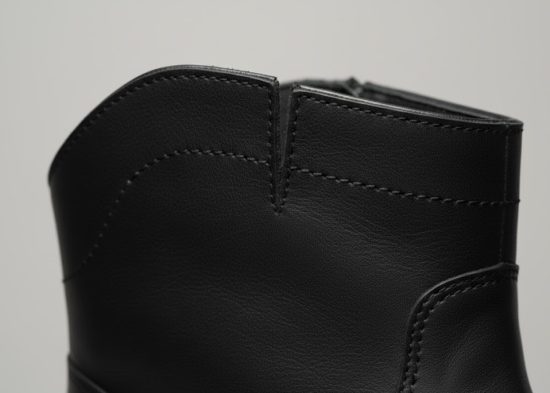
Top-Line with Cut-Out in Boot Construction
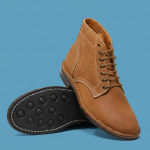
Boot models designed with a shaped top-line and controlled cut-out adapt more effectively to different leg sizes. Instead of forcing the upper to stretch uniformly, a wedge-shaped opening allows the shaft to adjust naturally during wear.
Purpose of the Cut-Out Design
The wedge-shaped cut-out is positioned along the outer side seam and stabilized with a stayed seam. This configuration provides flexibility in the leg area while maintaining structural integrity.
Key functions include:
- Allowing accommodation of varying calf girths
- Reducing pressure at the boot opening
- Improving wearer comfort during walking and sitting
- Maintaining a clean top-line profile
A lining top edging may be added primarily for reinforcement and finishing appearance. However, in lightweight boot constructions, a continuous lining throughout the leg section is often unnecessary.
Manufacturing Efficiency Insights: In many elegant women’s boots, manufacturers intentionally avoid full lining inside the leg. Properly calculated shaft width and upper shaping provide sufficient stability without additional material layers, helping reduce weight and cost.
Importance of Correct Leg Width Calculation
The success of top-line construction depends less on reinforcement and more on accurate pattern engineering.
When leg width and curvature are calculated correctly:
- The boot maintains close contact with the leg
- Wrinkling at the shaft is minimized
- Entry comfort improves naturally
- Visual proportions remain balanced
Boots using this construction commonly incorporate an inside slide fastener (zipper), which supports easy entry while preserving external design aesthetics.

Elastic Gussets in Bootees
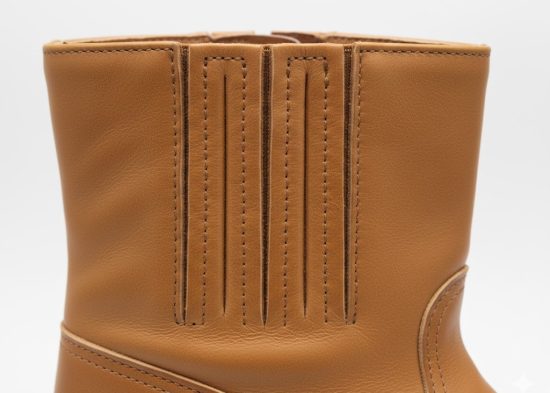
Elastic gussets represent another effective solution for improving entry while maintaining a snug leg fit. This method is widely used in ankle boots and bootees where flexibility and clean appearance must coexist.
Function of Elastic Gussets
Elastic panels allow controlled expansion when the wearer inserts the foot while enabling the boot to return to its original shape afterward.
Benefits include:
- Easier foot entry
- Improved adaptability to different calf shapes
- Reduced need for oversized shaft dimensions
- Enhanced wearing comfort
Engineering of Stretch Incisions
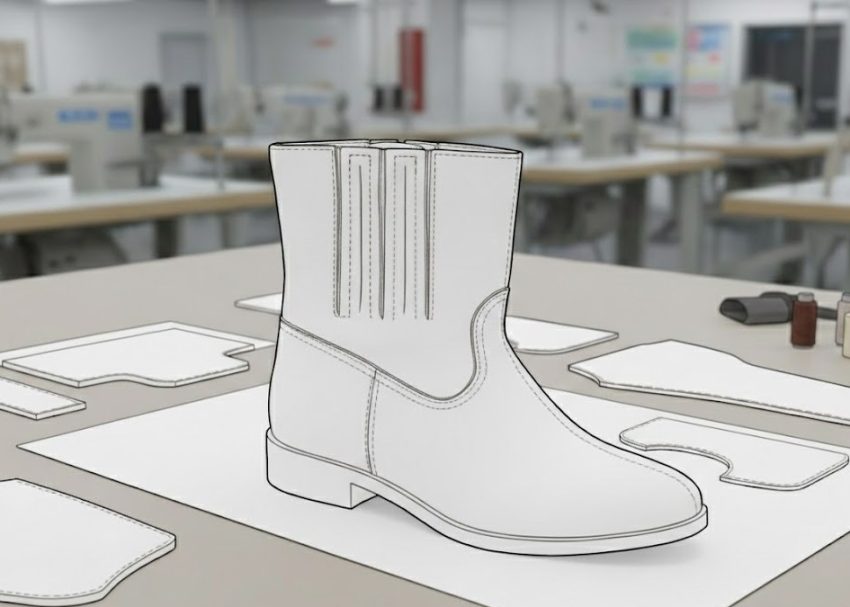
During gusset construction, stretch incisions are introduced into the upper material to allow expansion. However, these cuts should not normally extend fully to the top-line.
Stopping the incisions slightly below the top edge provides important advantages:
- Maintains a smooth and refined top-line appearance
- Prevents distortion at the opening edge
- Preserves structural strength of the shaft
- Ensures entry flexibility without compromising design
This small adjustment significantly improves visual quality while maintaining functional performance.
Manufacturing Insight and Best Practice
Boot comfort is rarely achieved through material stretch alone. Instead, successful designs combine pattern engineering, controlled flexibility, and strategic reinforcement.
Top-line cut-outs manage variation in leg girth through geometry, while elastic gussets provide dynamic adaptability during wear. When both techniques are applied thoughtfully, manufacturers achieve boots that are easier to wear, lighter in construction, and visually refined.
For this reason, these solutions should be integrated during development stages rather than corrected later in production.
Expert Tip (Factory Application) : Many top-line deformation issues originate from extending elastic cuts too high or over-reinforcing the shaft lining. Limiting incision height and optimizing pattern dimensions often eliminates the need for additional corrective operations during lasting