Footwear Manufacturing Insights: Metal Caps and Heel Pitch Checking in Last Engineering
Within footwear manufacturing, many fit and durability issues originate not from materials themselves, but from small engineering decisions made during last development and upper design. Among these, the correct application of metal toe caps and the accurate checking of heel pitch are frequently underestimated. Nevertheless, both elements have a direct influence on wearing comfort, visual balance, and long-term product performance.
Therefore, this Footwear Manufacturing Insights article explains the engineering principles governing metal cap decorations and outlines a workshop-proven method for checking heel pitch using stepped gauges, as practiced in professional last rooms and footwear development centres.


Metal Caps in Footwear Manufacturing: Design Rules and Fixing Logic
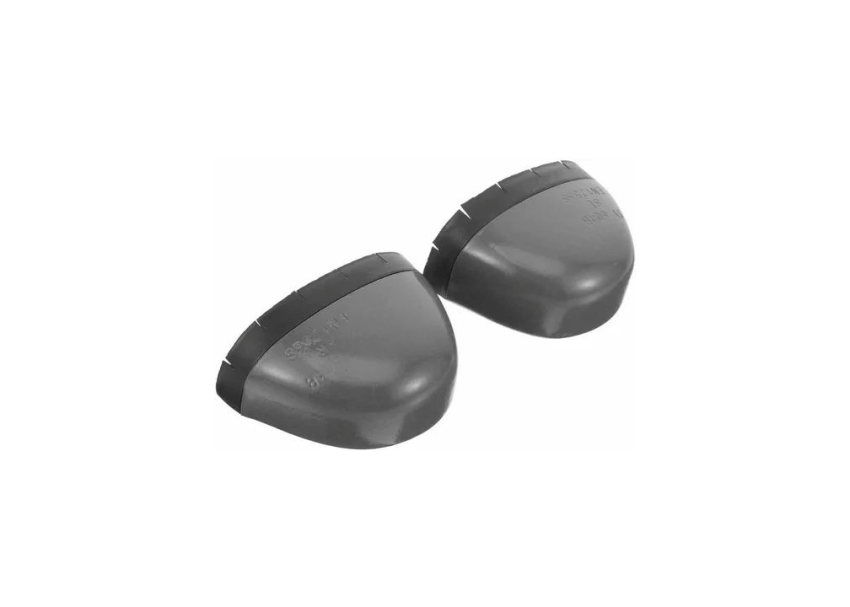
Metal decorations are commonly applied to toe caps and counters, particularly in fashion boots, dress footwear, Safety Shoes and premium collections. However, from a manufacturing perspective, these components must be treated as functional engineering elements rather than purely aesthetic features.
To begin with, metal caps must always be slightly shorter than the underlying toe cap or counter. In practice, this means that the metal element should never protrude beyond the edge of the leather or structural cap. When this rule is respected, the decoration remains firmly in place without generating excessive internal pressure during wear.
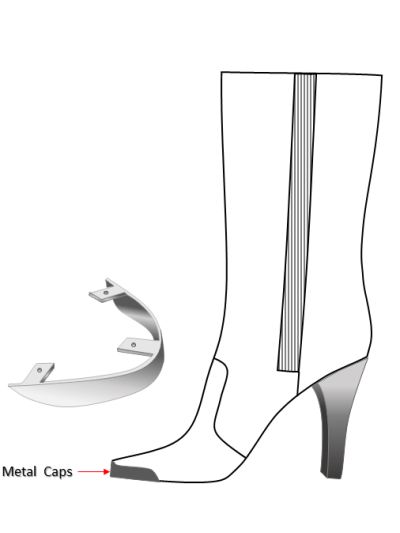
In addition, the securing tabs of metal caps represent a structural weak point. During lasting and daily use, these tabs are repeatedly subjected to bending forces. If the metal cap extends too far forward or is incorrectly aligned, stress concentrates at the tabs, increasing the risk of loosening or breakage.
Furthermore, metal decorations may only be bent within very narrow limits. They must closely follow the last shape. If the required curvature exceeds the safe bending range, a different decorative design should be selected. Unlike synthetic decorations, metal components retain their formed shape once bent correctly. By contrast, synthetic materials tend to spring back toward their original position, which may result in lifting or distortion after production.
As a result, metal caps are preferred where stable shape retention is essential, provided that bending limits and fixing geometry are strictly controlled.
Manufacturing Best Practices for Metal Toe Caps
From a production control standpoint, metal decorations should always be validated before bulk manufacturing begins. Trial fitting on the last allows engineers to confirm alignment, bending limits, and tab security.
Additionally, special attention must be given to toe spring and feather line curvature after decoration placement. When these checks are ignored, fit deviations often become visible only after lasting or during wear trials, when corrective action becomes costly.

Checking the Pitch of the Heel in Footwear Last Development
Heel pitch or Heel Height accuracy is fundamental to footwear balance, posture, and wearer comfort. Even minor deviations can result in instability, excessive forefoot pressure, or visual imbalance when the shoe is worn.
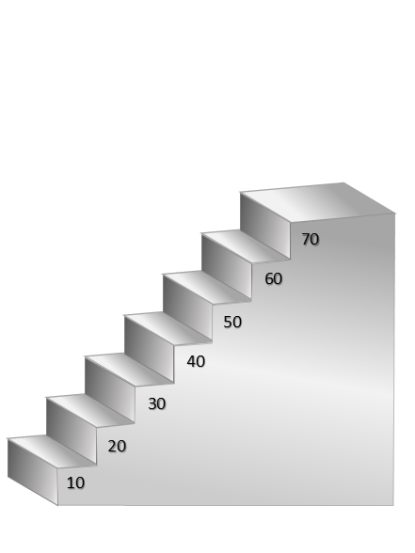
A simple and reliable workshop method for verifying heel pitch involves the use of stepped wooden/metal gauges. These gauges are produced with incremental height differences, allowing immediate comparison against the last bottom profile.
Typically, one side of the stepped block begins at 10 mm and increases in increments of 10 mm, progressing through 20 mm, 30 mm, 40 mm, 50 mm, 60 mm, and up to 70 mm. On the opposite side, the steps may begin at 5 mm and similarly increase by 10 mm.
When the last is positioned against these steps, the technician can quickly verify whether the heel height and pitch correspond to the intended design specification. This method is particularly effective during last grading, heel height verification, and sample approval stages.
Moreover, because the system relies on rigid reference steps rather than flexible measuring tools, it minimizes subjective judgment and measurement inconsistency.
Why Stepped Heel Pitch Checking Improves Manufacturing Accuracy
The stepped gauge method delivers immediate visual confirmation of pitch accuracy, ensuring that the heel and forepart relationship remains consistent across size runs and heel height variations.
Consequently, this approach supports:
- Improved balance during wear
- Reduced fit-related customer complaints
- Greater consistency between sample and bulk production
When incorporated into standard last approval procedures, heel pitch checking becomes a powerful preventive quality tool.

Impact on Footwear Fit, Durability, and Production Efficiency
When metal caps are incorrectly dimensioned or heel pitch is inaccurately set, problems often surface only after production scaling begins. At that stage, rework costs, rejection rates, and delivery delays increase significantly.
Conversely, early-stage control of decoration geometry and heel pitch ensures that:
- Last balance remains stable throughout grading
- Upper materials are not overstressed during lasting
- Finished footwear maintains its intended silhouette and comfort
Therefore, these controls should form part of every structured footwear manufacturing quality system.
Conclusion
Metal toe caps and heel pitch checking illustrate how precision-driven engineering decisions influence overall footwear performance. While metal decorations demand strict dimensional control and limited bending, heel pitch verification benefits from simple yet repeatable checking tools.
When these principles are applied consistently, manufacturers achieve improved fit accuracy, enhanced durability, and reduced production risk. Ultimately, attention to these details strengthens both product quality and brand credibility.