
Footwear Manufacturing Cutting-5 : Clicking Performance & Material Usage Analysis
Estimated Reading Time: ~ 10 minutes
Introduction
In the previous article Clicker Allowance & Pattern Scale Area Calculation, we established how a scientific cutting standard is created using pattern geometry, waste factors, leather coefficients, size and fitting adjustments, and net coefficients. Once this standard is defined, the next critical step is to measure actual performance against the standard.
Therefore, this article explains how clicking performance and material usage variance are calculated, interpreted, and used for management control in footwear cutting departments. More importantly, the concepts and tables discussed here align directly with the Clicker Allowance Form and Clicking Performance tables provided in the Cutting Excel sheet. As a result, factories maintain full consistency between theory and daily cutting practice.

1. Purpose of Clicking Performance Analysis
Clicking performance analysis aims to:
- Measure actual leather usage against standard allowance
- Identify favorable and unfavorable cutting results
- Evaluate clicker efficiency objectively
- Support corrective actions and continuous improvement
In practical terms, without performance measurement, clicker allowance remains only a calculated number and delivers no real operational value.
2. Standard vs Actual Leather Usage
Two values are required for performance analysis:
- Standard Leather Usage – derived from clicker allowance
- Actual Leather Usage – derived from leather issued and returned
For this reason, the comparison of these two values forms the foundation of effective material usage control.
3. Standard Leather Usage (Clicker Allowance)
The standard usage is calculated as:
Standard Cuttable Area (T) = Clicker Allowance per Pair × Number of Pairs
This value represents the expected cuttable leather consumption for a specific clicking batch.
All adjustments applied during allowance calculation (leather type, size, fitting, net coefficient) are embedded in this standard.

4. Actual Leather Usage Measurement
4.1 Leather Issued to Clicker
The cutting department issues leather to the clicker by grade and article. The cutting team records the issued quantity in gross area, which must then be converted into cuttable area using the applicable standard net coefficient.
Cuttable Area Issued (P) = Leather Issued × Net Coefficient
4.2 Leather Returned by Clicker
Unused leather returned after cutting must also be measured and converted into cuttable area.
Cuttable Area Returned (R) = Leather Returned × Net Coefficient
4.3 Actual Cuttable Area Used
Actual Usage (S) = P − R
This value represents the true leather consumption for the batch.

5. Clicker Allowance Form – Performance Section
The structure below corresponds to the Clicker Allowance Form included in the Cutting Excel sheet (Table 7).
Table 7 – Clicker Allowance & Usage Summary (Extract)
| Sq.ft | |||||
| G Basic Allowance (from Table 5) | 1.8476 | ||||
| H Leather Coefficient 1.02 (from Table 8) | |||||
| J “G” Adjusted to Leather type (H*G) | 1.8839 | ||||
| K Weighed average shoe size : 9 Fitting: Medium | – | ||||
| L “J” Adjusted to weighed average size/fitting Size & Fitting Coeff. * J = 1.051 * J (From Table 9 or 10) | 1.9800 | ||||
| A | B | C | D | Total Sq.ft | |
| M Standard Coefficient (Page 16) | 0.92 | 0.86 | 0.81 | 0.76 | |
| N Leather issued to the clicker (Sq.ft) | 24.75 | 185.00 | |||
| P Cuttable area issued (M * N) | 22.77 | 159.10 | 181.80 | ||
| Q Leather Returned from the Clicker | 11.75 | – | |||
| R Cuttable Area Returned (M*Q) | 10.11 | 10.11 | |||
| T – Clicker Allowance in Cuttable area, 90 Pairs * L | 178.20 | ||||
| S – Cuttable Area Used, (P-R) | 171.69 | ||||
| T – S Favorable (+) , Unfavorable (-) | +6.51 | ||||
| (T – S) / T * 100 (in %) | +3.6% | ||||
As a result, this form ensures full traceability between leather issue, return, and actual usage.


6. Calculating Clicking Performance
6.1 Performance Result
Performance Variance = T − S
6.2 Performance Percentage
Performance (%) = (T − S) / T × 100
This percentage allows comparison across different styles, batch sizes, and leather types
7. Clicking Performance Report
The summary below aligns with the Clicking Performance in Material Usage table provided in the Excel sheet (Table 11).
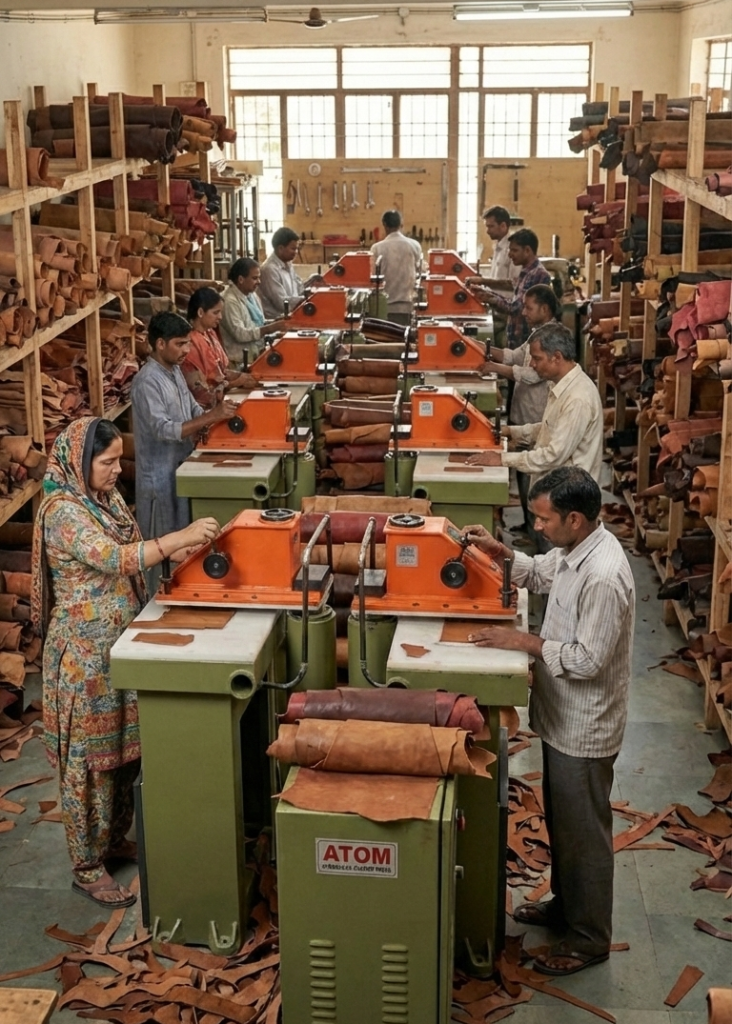
Table 11 – Clicking Performance in Material Usage
| Batch No | Leather Type / Color | Cuttable Area | Performance Favorable (+) Unfavorable (-) (T – S) / T *(100) | ||
| Allowed (T) Sq.ft | Used (S) Sq.ft | % (+) | % (-) | ||
| 000001 | Cow Calf | 178.20 | 171.69 | 3.6% | |
| Total | A | B | |||
| (A-B) / A * 100 | Favorable (+) | % | |||
| Unfavorable (-) | % | ||||
This table provides a clear and auditable view of cutting efficiency.
8. Interpretation of Performance Results
8.1 Favorable Performance
Favorable results may be due to:
- Good leather quality
- Effective pattern layout
- Skilled clicker performance
- Proper style-to-leather allocation
8.2 Unfavorable Performance
Unfavorable results may indicate:
- Poor leather grading accuracy
- Incorrect allowance setting
- High defect concentration
- Inadequate cutting practices
Performance data must always be interpreted together with leather inspection and grading data.

9. Management Use of Clicking Performance Data
Clicking performance data can be analyzed:
- By clicker
- By leather type
- By shoe style
- By skin size group
This enables:
- Process improvement initiatives
- Identification of best practices
- Targeted training needs
10. System Integration and Continuous Improvement
When integrated with:
- Leather inspection data
- Grading standards
- Cost per cuttable area
Clicking performance analysis becomes a closed-loop control system for cutting operations.
Conclusion
In conclusion, clicking performance and material usage analysis convert cutting standards into measurable operational results.. By comparing standard allowance with actual usage, footwear manufacturers gain visibility into cutting efficiency, leather quality impact, and operator performance.
This article completes the cutting control sequence that started with leather measurement, costing, grading, and allowance calculation. Together, these systems form a structured framework for material cost control and productivity improvement in footwear manufacturing.
Related Posts :
- Footwear Manufacturing – Cutting : Leather Area Measurement, Discrepancy & Net Coefficient
- Footwear Manufacturing – Cutting-2 : Calculating True Leather Cost Using Cuttable Area
- Footwear Manufacturing Cutting-3 : Leather Grading Systems & Vendor vs Factory Sorting
- Footwear Manufacturing Cutting-4 : Clicker Allowance & Pattern Scale Area Calculation