
Comprehensive Glossary of Foot Anatomy and Terminology: A Complete Guide for Health and Wellness
Reading Time : 14 Minutes
Introduction
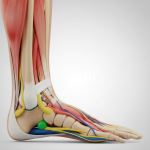
The human foot is a marvel of biological engineering, comprising 26 bones, 33 joints, and over 100 muscles, tendons, and ligaments that work in harmony to support our daily movements, balance, and posture. Whether you’re an athlete pushing your limits, a professional on your feet all day, or someone simply interested in maintaining optimal foot health, understanding the terminology associated with foot anatomy is essential.
This glossary delves into key terms related to the structure, function, and common conditions of the foot, drawing from foundational knowledge in podiatry and biomechanics. In today’s fast-paced world, where foot-related issues like plantar fasciitis or bunions affect millions, having a clear grasp of these concepts can empower you to prevent injuries, seek timely treatment, and appreciate the complexity of this often-overlooked body part. We’ve compiled and expanded this list to include modern insights, ensuring it’s a valuable resource for students, healthcare professionals, and everyday readers alike.

Abduction
Movement outward of the forefoot. This action is crucial for lateral stability during activities like side-stepping in sports or dancing, helping to distribute weight evenly and prevent strains on the inner foot structures.
Adduction
Movement inward of the forefoot. Often involved in corrective exercises for conditions like overpronation, adduction plays a role in maintaining alignment and reducing the risk of medial knee pain associated with foot misalignment.
Anatomy
Science of the structure of body parts or tissues. In the context of the foot, anatomy encompasses everything from bone architecture to soft tissue layers, providing the foundation for diagnosing and treating disorders through advanced imaging like MRI or X-rays.
Ankle Bones
The lower ends of the two leg bones, tibia and fibula. These form the ankle’s foundation, articulating with the talus to enable smooth pivoting motions essential for walking on uneven surfaces.
Ankle Joint
Joint formed by the lower ends of the two leg bones (tibia and fibula) and the talus bone of the foot. A hinge joint. This synovial joint allows for dorsiflexion and plantarflexion, critical for propulsion in gait cycles, and is commonly injured in sprains due to its weight-bearing role.
Arch
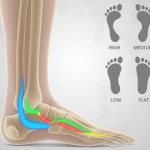
A structure of the foot curved to resemble an arc or bow. Foot arches act as natural shock absorbers, adapting to various terrains and supporting body weight dynamically.
Articulation
Refers to the mating surfaces of bones forming a joint. Smooth articulations ensure fluid movement, and issues like arthritis can erode these surfaces, leading to stiffness and pain.
Astragalus
See Talus. An older term still used in some anatomical contexts, referring to the pivotal bone in the ankle.
Ball (Foot)
The section of the foot formed by the five metatarsal heads. This padded area bears significant weight during toe-off in gait, making it prone to calluses or neuromas if overloaded.
Ball (Joint)
Usually refers to the inner surface of the great toe joint. It can also refer to the outer surface of the fifth toe joint at the ball. Proper joint alignment here prevents deformities like bunions..
Ball Flex Angle
Angle across the ball when the foot is flexed. This measurement is key in shoe design to ensure flexibility matches natural foot bending
Biomechanics
The science of mechanical movement of structures of the body, or parts of the body such as the foot. Modern biomechanics uses gait analysis technology to optimize performance in athletes and rehabilitate injuries.
Bromidrosis
Perspiration of the foot with offensive odor. Caused by bacterial breakdown of sweat, it can be managed with breathable footwear and antifungal treatments..
Bunion
Inflammation, swelling and soreness of the side surface of the great toe joint. Often hereditary, bunions worsen with ill-fitting shoes and may require surgical correction in severe cases.
Calcaneus
The heel bone. Also known as os calcis. As the largest foot bone, it absorbs impact from landing and anchors major tendons like the Achilles.
Callus
A hardening of the skin over an area receiving constant pressure. While protective, excessive calluses can crack and cause pain, often treated with moisturizers and pumice stones.
Chiropody
See Podiatry. An older term for the field now known as podiatric medicine..
Claw Foot
Description of a foot whose toes are bent backward in claw-like shape. Common with pes cavus (very high-arched) foot. This deformity can result from neurological conditions and may need orthotic intervention.
Corn (Hard)
A hardened, painful, usually inflamed area, generally on a toe, resulting from constant pressure, as from a shoe. It contains a cone-shaped “core” whose point presses on a nerve below. Debridement by a professional is recommended to avoid infection.
Corn (Soft)
A damp, whitish mass of skin that forms in the web between two toes from constant shoe pressure. Very painful. These interdigital corns thrive in moist environments and respond well to drying agents.
Cuboid
A large, cube-shaped bone at the outer side of the foot’s tarsal section. It articulates with the calcaneus and metatarsals, playing a role in lateral foot stability.
Cuneiform Bones
Three bones positioned in a row across the tarsal section of the foot, known as internal, middle and external cuneiforms. These wedge-shaped bones form part of the medial arch and facilitate midfoot flexibility.
Dorsi-Flexion
Position of the foot with the toes pointed upward. Essential for clearing the foot during the swing phase of walking, weakness here can cause foot drop
Dorsum
Referring to the upper portion or surface of the foot. This area is visible and often affected by conditions like extensor tendonitis from tight laces.
Eversion
Elevation of the outer border of the foot. Part of normal pronation, excessive eversion can lead to shin splints or knee issues.
Extension
Movement of the foot forward and downward away from the leg. This plantarflexion action powers activities like sprinting or ballet pointe work..
Calcaneus
The heel bone. Also known as os calcis. As the largest foot bone, it absorbs impact from landing and anchors major tendons like the Achilles.
Callus
A hardening of the skin over an area receiving constant pressure. While protective, excessive calluses can crack and cause pain, often treated with moisturizers and pumice stones.


Fibula
The smaller of the two leg bones, on the outer side of the leg. It provides attachment points for lateral ankle ligaments.
Flat Foot
A foot without its inner long arch. There are two basic types of flat foot, one functionally normal, the other functionally abnormal. Flexible flat feet are common and asymptomatic, while rigid ones may indicate underlying pathology.
Foot Stance
Position of the foot in standing or walking, such as turned inward or outward. Abnormal stances like duck feet can signal hip or knee misalignments.
Flaccid Foot
Excessively relaxed, flabby. Often seen in hypotonic conditions, it lacks tone and may require strengthening exercises.
Flexion
Movement of the foot upward toward the leg. Dorsiflexion strengthens the anterior tibialis and is key in rehabilitation programs.
Function
The dynamic character or use of a body part, such as foot function. Optimal function involves coordinated muscle activity for efficient movement.
Gait
Any form of body locomotion such as walking, trotting, running. Gait analysis helps identify inefficiencies that contribute to overuse injuries..
Hallux Valgus
An abnormal bending of the great toe outward toward the other toes. The medical term for bunion deformity, often progressing with age.
Heloma
Medical term for a corn. Used in clinical settings to describe hyperkeratotic lesions.
Hypersensitive Foot
A foot extremely sensitive to touch or pressure. Common in neuropathies like diabetes, requiring protective footwear.
Hallux
The great toe. As the big toe, it bears 40% of body weight during push-off.
Hammer Toe
A claw-like, drawn-back toe. Caused by muscle imbalances, it can be corrected with splints or surgery.
Hyperidrosis
Excessive sweating of the foot. Managed with antiperspirants or botox injections in severe cases.
Inflare
A foot, last or shoe whose forepart is shaped to have an inverted, or flared-in look. This design accommodates narrow forefeet.

Ingrown Nail
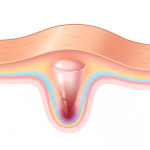
A toenail (usually of the great toe) whose edge has grown down and into the flesh of the toe, causing pain and infection. Prevention includes proper trimming; treatment may involve partial nail removal…
Insert
Any device or item inserted into the shoe for some adjustment purpose, such as an arch support or arch cookie. Over-the-counter inserts provide affordable relief for mild issues.
Inversion
Elevation of the inner border of the foot. Excessive inversion is a common mechanism in ankle sprains..
Ligament
A band of fibrous, elastic tissue that connects bones and joints. Ligaments provide stability but can tear under stress.
Insensitive Foot
A foot that has lost feeling. Common with diabetics. Regular inspections are crucial to prevent ulcers.
Instep
The top center of the foot in front of the ankle and behind the waist and ball of the foot. High insteps require deeper shoe vamps for comfort.
Joint
The junction or articulation of two or more bones which come together to form a joint, held together by one or more ligaments. Synovial joints in the foot allow for multi-planar motion.
Mallolus
The outer tip of the ankle bones. Note: This appears to be a potential historical or variant spelling; commonly referred to as “malleolus” in modern anatomy, with the lateral malleolus on the fibula.

Metatarsal Arch
See Arch. As previously detailed, it’s integral to forefoot cushioning.
Metatarsalgia
A general term referring to pain or distress under the ball of the foot. Often due to overuse, it’s treated with metatarsal pads and rest.
Metatarsal Pad
A small, pear-shaped pad fitted under the foot (or inside the shoe), designed to lift the metatarsal arch and relieve pressure on the ball. Widely used in orthotics for forefoot pain.
Orthopedic
Referring to the prevention or correction of bone and joint deformities. It can be specialized, such as foot orthopedics. Orthopedic interventions range from braces to joint replacements.
Orthotic
A device, material or adjustment designed to correct or straighten some disorder of the skeletal body structure. Foot orthotics apply to the foot and shoe. 3D-printed custom orthotics represent a modern advancement.
Outflare
Refers to a foot, last or shoe in which the forefoot is shaped to have an everted or flared-out look. Suited for wider forefeet.
Metatarsal Bones
Five slender, finger-like bones between the tarsal bones and toe bones. They form the midfoot and are numbered 1 to 5 from medial to lateral.
Metatarsus
The five metatarsal bones together as a unit. This region is prone to stress fractures in runners.
Navicular
Known as the keystone bone, it forms the top of the long inner arch. Also known as the scaphoid bone. Its prominence can indicate accessory bone issues.
Orthopedist
A medical practitioner who specializes in the prevention or correction of bone and joint deformities. Usually an orthopedic surgeon. They collaborate with podiatrists for foot-specific cases.
Os Calcis
See Calcaneus. The Latin term for the heel bone.
Pedicure
A manicure treatment for the toes. Also applies to a cosmetic treatment of the foot. Medical pedicures address nail and skin health.
Perspiration
Sweat, consisting of 98 per cent fluids, two per cent acids and salts. Secreted by sweat glands and emitted through pores in the skin. Foot perspiration aids thermoregulation but can lead to fungal infections if unmanaged.
Pes Planus
Congenital or inherited flat foot, usually functionally normal. Many people with pes planus live without symptoms.
Plantar
Referring to the sole of the foot. Plantar surfaces endure high pressure, hence common issues like warts.
Plantar-Flexion
Position of the foot with the toes and foot bent backward toward the leg. Powered by the gastrocnemius and soleus muscles.
Podometrics
The science of foot measurements. Used in custom shoe making and orthotic design.
Pump Bump
A common term referring to a distressing swelling or “bump” behind the heel tendon, caused by pressure or friction from a shoe, usually a tight-fitting pump. Also known as Haglund’s deformity.
Pes Cavus
Extremely high-arched foot, usually inverted and abnormal. Associated with neurological disorders, it requires cushioned insoles.
Phalanges
Medical term for the 14 toe bones. Divided into proximal, middle, and distal for toes 2-5.
Plantar Fascia
The thick, powerful layer of ligament-like tissue that fans out over the sole of the foot. Inflammation here causes plantar fasciitis, a leading cause of heel pain.
Podiatry
The branch of medicine that specializes in the care of the foot in health and illness. Formerly known as chiropody. Podiatrists handle everything from surgery to diabetic foot care.
Pronation
An outward rotation or twisting of the heel bone accompanied by a depression and inward falling of the long inner arch and an abduction/eversion of the forefoot. A mild degree of this is normal on weightbearing. When excessive it is abnormal, distressing and requires treatment. Overpronation is linked to various lower limb injuries..
Scaphoid
See Navicular. The boat-shaped bone central to arch integrity.

Sesamoid Bones
Two pea-sized bones under the big toe joint, forming a “channel” through which an important toe tendon passes. They enhance leverage but can become inflamed (sesamoiditis).
Sustentaculum Tali
Small shelf of bone on inner-upper rim of heel bone. Important to support of the long arch. It supports the talus and posterior tibial tendon.
Talus
The second largest bone of the foot (next to the heel bone), connecting the foot to the lower ends of the leg bones and forming the ankle. It transmits body weight and enables ankle rotation.
Tarsus
The rear section of the foot composed of the seven tightly compacted tarsal bones. It provides a stable base for the forefoot.
Tendon Achilles
The heel tendon that connects the calf muscles to the heel bone. The largest, most powerful tendon of the body. Ruptures require prompt medical attention.
Therapy
A general term applying to some kind of medical treatment. Can be specialized such as foot and/or shoe therapy. Integrative therapies combine physical therapy with orthotics..
Trauma
Relating to some kind of injury or wound. Foot trauma ranges from acute sprains to chronic stress.
Valgus
Abnormal turning outward of the foot or a part, such as a bent big toe (hallux valgus). Seen in knee valgus as well.
Support (Foot)
The foot’s natural support mechanisms, such as the arches, joints, ligaments, muscles, etc. These intrinsic supports can be augmented with extrinsic aids.
Synovial Sac
The lining membrane inside a joint containing a lubrication called synovial fluid. Synovitis occurs when this sac inflames.
Tarsal
Referring to the tarsus. The proximal foot region.
Tendon
The smaller, thinner ends of a muscle that connect the muscle to a bone. Tendons store elastic energy for efficient movement.
Therapeutic
Referring to therapy or treatment for some disorder. Foot therapeutics include modalities like ultrasound or laser therapy..
Tibia
The larger of the two leg bones, on the inner side of the leg, and also known as the shin bone. It bears most leg weight.
Transverse Arch
See Arch. Contributes to midfoot stability.
Tread (Foot)
The weightbearing surface and pattern of the sole of the foot in standing, walking, running, etc. Tread patterns influence grip and wear.
Varus
An abnormally bent condition of the foot; turning inward. There are several kinds of foot varus conditions. Hindfoot varus can cause supination issues.
Conclusion
Mastering the glossary of foot anatomy and terminology not only enhances your understanding of this intricate body part but also equips you to make informed decisions about foot care and prevention. From the foundational arches that absorb shock to the tendons that propel us forward, each element plays a pivotal role in our mobility and overall well-being. In an era where sedentary lifestyles and improper footwear contribute to rising foot ailments, resources like this serve as a reminder to prioritize foot health through regular check-ups, appropriate exercises, and ergonomic choices. Whether you’re dealing with a specific condition or simply curious, we hope this expanded guide inspires you to step confidently into better health. Remember, healthy feet are the foundation of an active life—consult a podiatrist for personalized advice.