Vegetable Tanning Process: Complete Guide from Pickled Pelt to Tanning
Estimated Reading time: ~ 7 minutes
Introduction
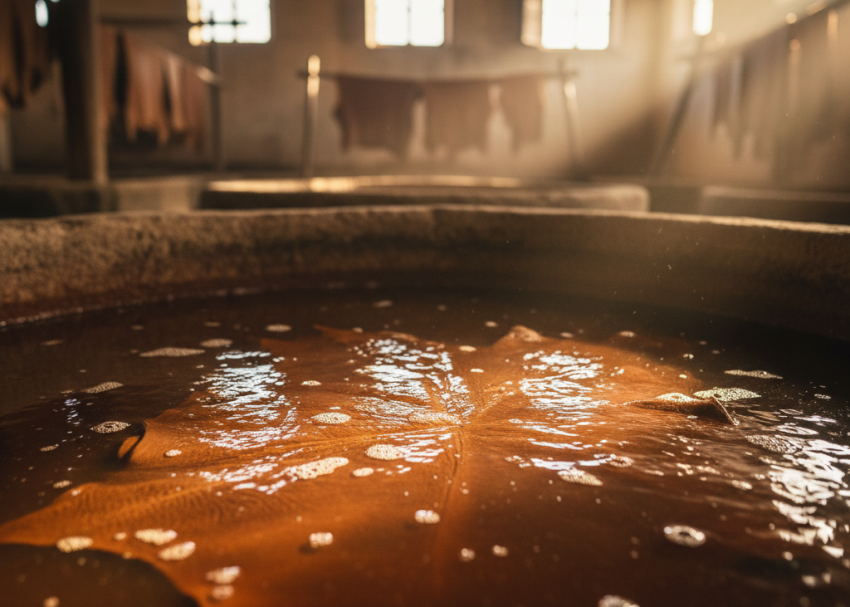
Leather crafting is an ancient art, and few methods carry the heritage, sustainability, and soul of vegetable tanning. Unlike chrome tanning, which dominates 85–90% of global production for its speed, vegetable tanning uses only natural tannins from tree bark, leaves, and fruits — resulting in biodegradable, breathable leather that develops a legendary patina over time.
A Brief History of Vegetable Tanning
- 5000+ years ago – Ancient Egyptians and Mesopotamians used oak galls and pomegranate rind.
- Middle Ages – European rivers were lined with tanneries using oak, chestnut, and quebracho bark in pit systems lasting months.
- 19th Century – Invention of spray-dried tannin extracts and rotating drums cut time from months to days.
- Today – Only ~10% of world leather is vegetable tanned, but demand is surging among luxury and eco-conscious brands (Hermès, Visvim, Horween, etc.).
Reference: The Fascinating 7000 Years history of Vegetable tanning
Raw Material: The Pickled Pelt
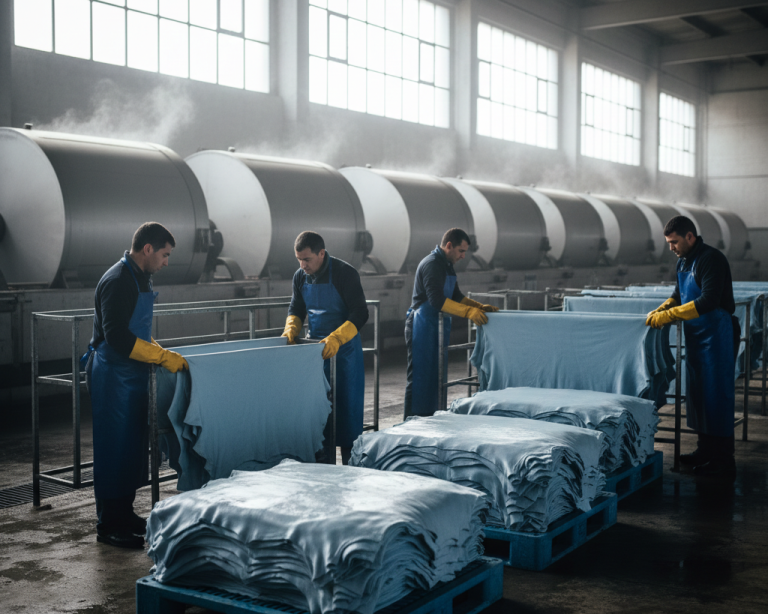
After slaughter and liming, hides are preserved in a brine of salt + sulfuric acid (pH 2.5–3.0). This “pickled” state prevents putrefaction and allows global shipping.
Key inspection points before tanning:
- No red heat (bacterial damage)
- Uniform thickness (1.2–2.0 mm for belts, 3–4 mm for soles)
- Salt content < 18%
- Storage temperature 4–10°C, max 3 weeks
Complete Step-by-Step Vegetable Tanning Process
Step 1: Rehydration / Soaking
Goal: Remove excess salt and rehydrate fibers
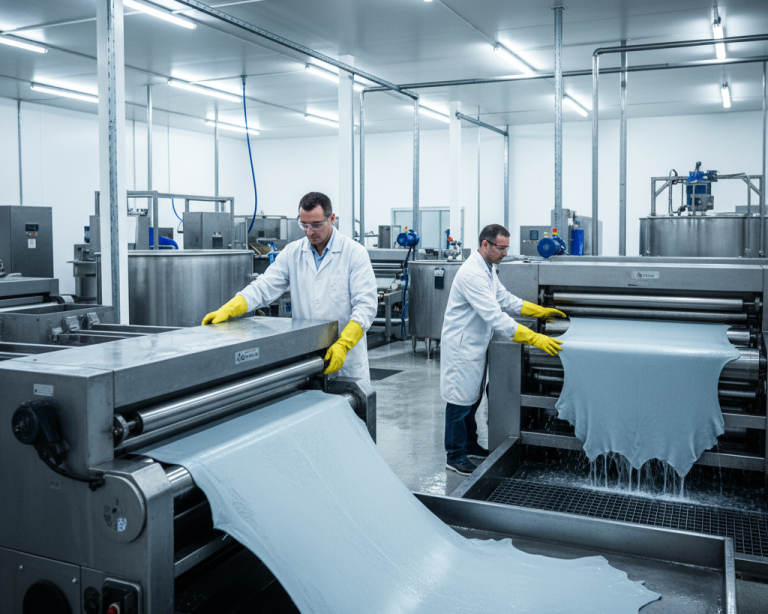
Machinery: Stainless steel soaking drums or paddle vats
Float: 200–300% water (20–25°C)
Chemicals:
- 0.3–0.5% non-ionic surfactant
- 0.2% bactericide (optional)
Time: 2–4 hours
Pro Tip : Run at 8–10 rpm with 5-minute reversals to avoid tangling.
Step 2: Depickling & Neutralization
Goal: Raise pH to 4.5–5.2 for optimal tannin penetration
Chemicals (gradual addition):
- 0.8–1.2% sodium formate (buffer)
- 1.0–1.8% sodium bicarbonate (added in 4 shots, 20 min apart)
Final pH: 4.8–5.2
Temperature: 25–28°C
Time: 90–120 minutes
Pro Tip : Never exceed pH 5.5 — risk of tannin shock and draw.


Step 3: Pre-Tanning (Handler Stage)
Goal: Open fiber structure, prevent over-tanning on grain
Liquor strength: 1.5–3% vegetable tannin extract (mimosa or quebracho)
Salt: 1% (prevents acid swell)
Time: 6–12 hours in drum
Pro Tip: Use synthetic tannins (syntans) at 0.5% for more uniform color.
Step 4: Main Vegetable Tanning
Option A – Modern Drum Tanning (24–72 hours)
| Stage | Tannin % Added | Total Liquor Strength | Time | Temperature |
|---|---|---|---|---|
| 1 | 4–5% | 6–8° Bé | 8h | 26°C |
| 2 | 5–6% | 10–12° Bé | 12h | 28°C |
| 3 | 6–8% | 14–18° Bé | 12–24h | 30°C |
| Final boost | 2–3% hot liquor (50°C) | – | 2h | – |
Pro Tip: Use automatic dosing systems to inject concentrated extract every 4–6 hours — prevents surface over-tanning.
Option B – Traditional Pit Tanning (4–12 weeks)
| Pit Type | Tannin Strength | Duration |
|---|---|---|
| Weak pits | 0.8–1.5% | 4–7 days |
| Medium pits | 2–4% | 10–20 days |
| Strong pits | 5–8% | 3–8 weeks |
Famous regions: Tuscany (Val di Chiana), Spain (Igualada), England (J&FJ Baker oak bark pits).
Step 5: Washing & Sammying
- Warm water rinse (35°C) × 15 min
- Sammying machine → moisture 55–62%
- Setting out (hydraulic or felt roller) to remove creases
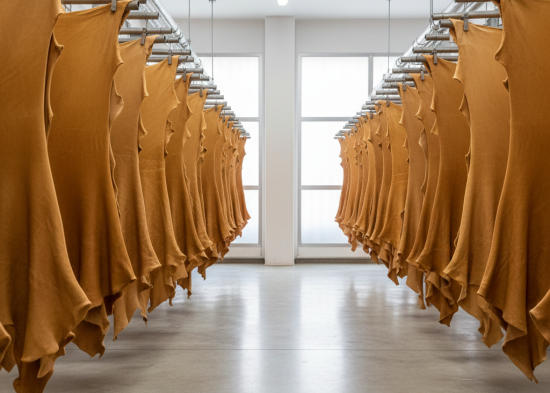
Step 6: Drying the Crust
| Method | Temperature | Time | Final Moisture | Best For |
|---|---|---|---|---|
| Vacuum drying | 55–70°C platen | 2–4 hours | 10–14% | Fast production, flat grain |
| Toggle drying | 30–40°C air | 24–48 hours | 12–16% | Luxury bags, even color |
| Paste drying | 25–35°C | 36–72 hours | 14–18% | Heavy soles, natural look |
| Hang drying | Ambient | 3–7 days | 14–18% | Traditional artisanal crust |
Pro Tip: For premium crust, vacuum dry at 60°C for only 90 seconds per cycle × 3, then finish on toggles — prevents case hardening.
Pro Tips from Master Tanners (2025)
- Blend tannins – 60% mimosa + 30% quebracho + 10% chestnut = perfect warm tone and firmness.
- Hot pit finale – Last 2 hours at 40–45°C dramatically improves penetration in thick hides.
- pH is king – Never drop below 4.2 during tanning; fibers close and tannin locks out.
- Use spent liquor – Recycle weak liquors for pre-tanning → saves 30–40% extract cost.
- Crust moisture – Export at exactly 14% (±2%) — prevents mold and cracking in containers.
Top Vegetable Tanned Leather Regions – Case Studies
| Region | Main Tannin | Typical Time | Famous For |
|---|---|---|---|
| Tuscany, Italy | Chestnut/Quebracho | 30–60 days | Vacchetta, Conceria Walpier |
| Tamil Nadu, India | Mimosa (wattle) | 3–7 days | Cost-effective, eco exports |
| Vietnam | Mimosa + Chestnut | 5–14 days | Rapidly growing luxury supply |
| UK (J&FJ Baker) | Oak bark | 12–18 months | The only remaining oak bark tannery |
Why Vegetable Tanned Leather Wins on Sustainability
- 100% biodegradable
- Zero chromium (unlike 90% of world leather)
- Natural patina instead of painted finish
- Recyclable tannin liquors
- Preferred by REACH and ZDHC compliant brands
Conclusion
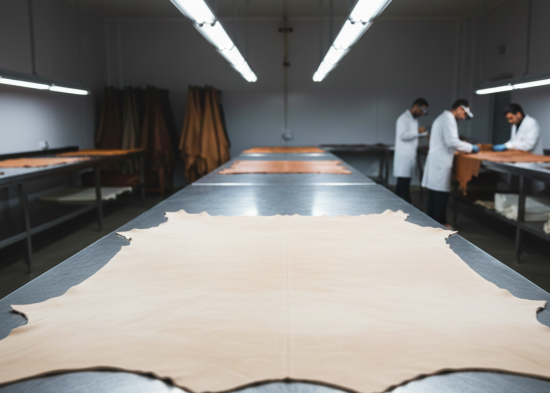
After 3 days to 12 weeks of careful tanning and controlled drying, you now hold vegetable tanned leather crust — the most soulful, eco-friendly leather on the planet.
Missed earlier parts?
← Part 4: Tanning to Crust
← Part 3: Transforming hides into Leather
← Part 2: Preparing hides for Tanning
← Part 1: From Hide to Pre-Tanning
For sustainable leather production standards: Leather Working Group → https://www.leatherworkinggroup.com/