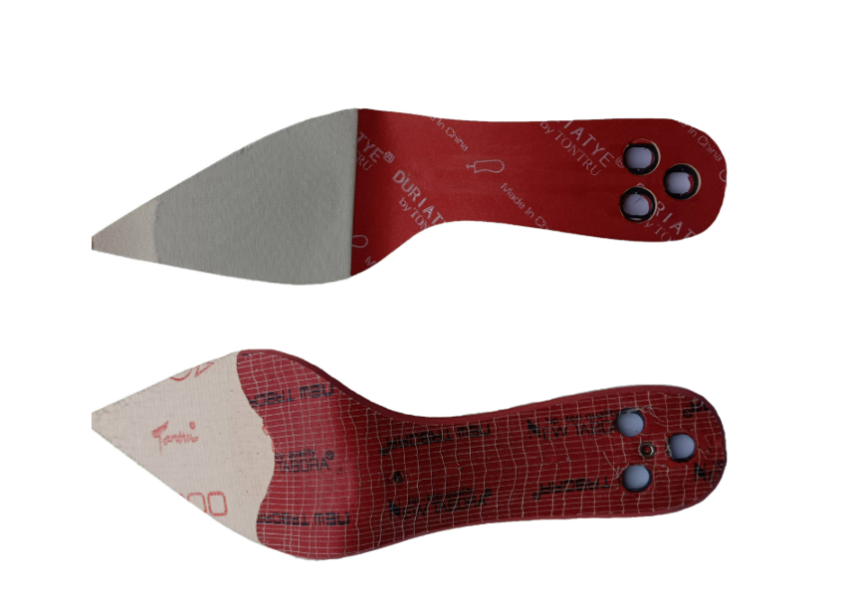
Insole Boards, Seat Boards, and Backpart Reinforcement Materials in Footwear Construction
Introduction
Insole boards, seat boards, and backpart reinforcement materials form the structural foundation of footwear. Although they remain hidden components, their influence on shape retention, durability, wearer comfort, and manufacturing efficiency is significant. Therefore, footwear engineers must understand not only the material composition of these boards, but also their mechanical behaviour during lasting, wear, and environmental exposure.
This article examines the types, manufacture, properties, dimensional control, and performance requirements of insole forepart boards, seat boards, stiffener boards, and plastic backpart insoles as used in conventional and engineered footwear constructions.

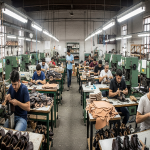
Kinds of Insole Boards Used in Footwear
Insole boards are used in the forepart or through the full length of the shoe. They provide a base for upper attachment, lasting operations, and load distribution during wear. The main kinds of insole forepart boards fall into four principal groups.
Rubber-Bonded Leatherboard
Rubber-bonded leatherboards are manufactured from chrome-tanned and/or vegetable-tanned leather fibres. These boards contain a leather fibre content of at least 75% and are given the general designation LR. Several commercial grades are available, allowing footwear manufacturers to select boards based on stiffness, density, and moulding behaviour.
Common trade names for rubber-bonded leatherboards include Articor, Ferreraflex, Robus, Wardex, and Salamander. These boards are widely used due to their balance of strength, mouldability, and adhesion during lasting.
Rubber-Bonded Cellulose Board
Rubber-bonded cellulose boards are manufactured from cellulose fibres and are designated VR. Unlike leatherboards, these boards rely entirely on cellulose fibre structure combined with rubber bonding agents. Typical trade names include Texon and Bontex
Rubber-bonded cellulose boards are generally lighter in weight and offer consistent quality, making them suitable for controlled manufacturing environments.
Rubber-Bonded Leather and Cellulose Combination Board
These boards are manufactured from a mixture of leather fibres and cellulose fibres. The leather fibre content typically ranges from 10% to 75%, and the boards are designated LVR. This construction allows manufacturers to balance cost, stiffness, and moisture behaviour according to footwear type.
Bonded Synthetic Fibreboard
Bonded synthetic fibreboards are a more recent development in insole technology. They consist mainly of polyester, polyamide, polypropylene, acrylic, and viscose rayon fibres, either alone or in blended form. These boards are non-woven structures developed to provide controlled performance and consistency.
Pro Tip: Selection Mistake : Using cellulose boards above 3.15 mm thickness often results in unpredictable performance. Above this range, leatherboard or engineered backpart solutions should be selected.
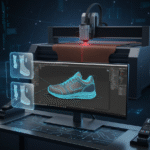
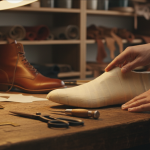
Manufacture of Non-Woven Synthetic Insole Boards
The manufacture of non-woven bonded synthetic fibreboards begins with either blending selected fibres or using ready-blended fibres where fibre composition, denier, and fibre length are known. The fibres are carded and formed into a fine web, which is collected around a large drum.
This web is then cross-lapped on a conveyor belt system. During this stage, fibres are arranged at right angles to those in adjacent layers, improving fibre locking and random fibre distribution. The layered web, known as a batt, is then needled to increase fibre entanglement. Finally, the batt is impregnated using conventional impregnating techniques to achieve the required stiffness and strength.
Surface Treatment and Finishing of Insole Boards
The top surface of insole boards can be used unprepared. However, it is often split, sanded, or buffed. Alternatively, boards may be finished with lacquers or pigmented coatings. Sanding and buffing remain the most common surface treatments, as they improve bonding during lasting and enhance visual cleanliness.
Thickness Range and Dimensional Tolerances of Insole Boards
The thickness of insole boards typically ranges from 1.5 mm to 5.0 mm, although most boards fall between 1.8 mm and 3.0 mm. For cellulose boards, the maximum thickness is generally 3.15 mm. Thicknesses above this value must be leatherboard, and boards thicker than 5.0 mm, while available by special order, are often of suspect quality.
Thickness tolerance varies between manufacturers but is usually ±0.1 mm. Minus tolerance is regarded as more critical than plus tolerance. Some manufacturers aim for zero minus tolerance but allow a plus tolerance of up to 0.2 mm.
Edges of leatherboards may taper, so cutting directly at the board edge is discouraged to maintain dimensional accuracy.
Insole Seatboards (Reinforcement and Shank Boards)
Seatboards, also known as reinforcement or shank boards, are used in the heel seat area to provide rigidity and support. They are usually produced from vegetable fibres, using a lower volume of bonding agent than forepart insole boards, resulting in a more rigid material.
Commercial Grades of Seatboards
There are three commercial grades of standard seatboard:
- Commercial Grade I – coloured red
- Commercial Grade II – coloured blue
- Commercial Grade III – coloured grey
These commercial grades are based on fibre quality and manufacturing method. They are sometimes confused with technical grades, which are intended to indicate fitness for purpose and are discussed separately.
Thermoplastic Reinforcement Boards
In addition to standard reinforcement boards, a thermoplastic board made from vegetable fibre is available. This board is specially impregnated to provide greater rigidity and firmness than Commercial Grade I seatboard and is commonly referred to as M34 or Supershank.
Seatboards are available in thickness increments of 0.5 mm, ranging from 1.4 mm or 1.5 mm up to 4.0 mm. Manufacturer tolerances are typically ±0.1 mm, although these tolerances are often exceeded due to raw material variability.
Related Posts

Plastic Backpart Insoles and Sandwich Construction
Plastic backpart insoles have been used since the early 1960s. While early designs involved completely moulded backparts, these have largely been replaced by sandwich constructions.
In sandwich construction, a cellulose board or leatherboard is split halfway through its thickness from the seat to the joint position. The split insole is placed into a mould that accurately reproduces the shape and contours of the last bottom. Polypropylene is then injected between the split halves of the backpart.
The completed insole backpart offers several advantages:
- It is more rigid than conventional fibreboard backparts
- It provides consistent accuracy of fit to the last backpart when tooling is correct
- It offers good lasting adhesion due to the external skin of cellulose or leatherboard
- It is unaffected by moisture, ensuring shape retention and heel pinholding during wear
Plastic backpart insoles are engineered products and offer clear advantages over conventional insole constructions in higher-heeled footwear.
Stiffener Boards
Stiffener boards were originally manufactured from cellulose or leather-cellulose boards containing limited binder content. In recent years, lighter-weight flexible stiffeners made from rubber-bonded leatherboard or rubber-bonded leather and cellulose board have become popular.
Stiffener boards must be stiff yet resilient, strong enough to be moulded and skived while retaining the moulded shape during wear. The top edge of the stiffener must resist repeated flexing, with high flex resistance serving as a general indicator of quality.
Tensile strength is an important quality measure, as it indicates firmness and shape retention of the moulded stiffener bowl. Since stiffeners are exposed to moisture from both external water and sweat, wet tensile strength is particularly critical.
Heel Lift Fibreboards
Fibreboards used for heel lifts are thicker and softer than stiffener boards. Low density is desirable, water absorption should be low, and the boards must not chip or break when compressed.
Pro Tip: Process Control : Maintain strict thickness tolerance control on seatboards and backpart insoles. Even small minus tolerances can lead to heel instability, poor pin retention, and inconsistent last conformity.
Requirements for Manufacture and Wear
Requirements of Insole Forepart Boards
Insole boards must meet several general requirements to suit footwear manufacture and wear. They must be strong enough to form an adequate bond with uppers or ribs. They should absorb moisture readily and dry quickly, retain a firm feather edge, and present a clean appearance.
Additionally, insole boards must mould easily without buckling or creasing, offer appropriate flexibility for the construction, cut cleanly, remain dimensionally stable, and resist cracking, buckling, delamination, and degradation during wear.
Less general but important requirements include resistance to heat for vulcanised footwear and resistance to stitch tear for machine-sewn constructions.
Requirements of Insole Seatboards and Plastic Backparts
Seatboards must be rigid enough to resist movement in wear while still allowing bedding down to the last during manufacture. They must resist moisture, retain a clean feather edge, mould without creasing, cut cleanly in multiple thicknesses, and remain dimensionally stable.
They must also provide strong adhesion without delamination, retain lasting tacks when required, and resist heel-pin heads pulling through, relative to heel height.
Pro Tip: Common Defects : Edge tapering on leatherboards often causes cutting inaccuracies. Avoid cutting directly at board edges and enforce material inspection before die cutting.
Relevant SATRA
- SATRA TM1 – Thickness of leather and insole materials
- SATRA TM2 – Tensile properties of insole materials
- SATRA TM11 – Pin holding strength of insole materials
- SATRA TM12 – Density of leather, leatherboard and insole materials
- SATRA TM101 – Surface peel strength of insole materials
- SATRA TM112 – Fatigue resistance of insole backparts and backpart components
- SATRA TM121 – Shrinkage of insole materials on repeated wetting and drying
- SATRA TM278 – Moisture transfer test for insoles

Leading Global Manufacturers of Insole Boards, Seatboards, and Backpart Reinforcement Materials
Selecting the right supplier for insole boards, seatboards, and backpart reinforcement materials directly affects footwear durability, shape retention, and production consistency. Therefore, global footwear brands and OEMs rely on experienced manufacturers that combine material engineering expertise with scalable manufacturing and strong technical support. The following companies represent industry leaders known for consistent quality, innovation, and long-term reliability in footwear reinforcement materials.
Coats Footwear (inc. Texon & Rhenoflex)
Coats Footwear integrates the technical heritage of Coats, Texon, and Rhenoflex into a unified global materials platform. As a result, the company supplies advanced insole boards, non-woven reinforcements, fibreboards, and structural components for multiple footwear categories. Moreover, Coats supports customers through global testing facilities, application engineering, and sustainability initiatives. Their reinforcement materials deliver consistent thickness control, reliable bonding performance, and mechanical stability, which helps manufacturers improve lasting quality and reduce production defects across high-volume operations.
🔗 https://www.coats.com/en/industries/footwear/
Bartoli International S.p.A.
Bartoli International is a well-established Italian manufacturer specialising in technical footwear materials, including insole boards, reinforcement sheets, and thermo-plastic composites. Unlike generic board suppliers, Bartoli focuses on precision thickness control, enhanced water resistance, and mechanical durability. Furthermore, the company supports luxury, sports, and protective footwear manufacturers with tailored material solutions. By combining traditional fibreboard expertise with modern composite technologies, Bartoli enables consistent heel support and long-term shape stability across demanding
🔗 https://www.bartoli.it/ (company site)
TC Components Ltd (UK)
TC Components Ltd brings over four decades of experience in supplying footwear and leather goods materials. The company produces cellulose boards, non-woven reinforcements, and structural substrates used in insoles and backpart reinforcement areas. In addition, TC Components places strong emphasis on sustainable manufacturing and waste reduction. Because of their technical advisory approach, footwear manufacturers rely on TC Components to optimise board selection for durability, moisture behaviour, and efficient production flow.
🔗 https://www.tccomponentsltd.com/footwear/insole-materials
Zheng Hong Shoes Material Co., Ltd (China)
Zheng Hong Shoes Material manufactures chemical fibre insole boards and non-woven reinforcement materials for global footwear OEMs. Their product range supports custom thickness, density, and stiffness requirements. As a result, manufacturers can match board performance precisely with toe puff and stiffener systems. Moreover, Zheng Hong maintains scalable production capacity, which helps large footwear factories maintain material consistency across high-volume output.
🔗 http://www.cn-zhh.com
KingHope (China)
KingHope Group develops non-woven insole boards and composite reinforcement materials used across athletic, casual, and work footwear. The company offers both OEM and ODM services, allowing customers to specify mechanical performance and processing behaviour. Furthermore, KingHope follows international material compliance standards, which strengthens confidence among export-oriented manufacturers. Consequently, their boards perform reliably during lasting and long-term wear cycles.
🔗 https://kinghopegroup.com/insole-board/
WINIW International Co., Ltd (China)
WINIW International focuses on engineered non-woven boards designed to balance comfort, flexibility, and structural stability. Their insole board materials support consistent thickness control and predictable moisture behaviour. Additionally, WINIW maintains strong quality monitoring systems to ensure repeatable performance across production batches. Therefore, global footwear manufacturers use WINIW materials to maintain process stability while meeting competitive cost targets.
🔗 https://www.shoe-materials.com/product-category/insole-board/
Ying Pao Chia (Taiwan)
Ying Pao Chia specialises in composite boards that combine polypropylene or polyethylene with fabric and non-woven layers. These materials offer excellent water resistance and mechanical resilience. Moreover, Ying Pao Chia promotes recycled and sustainable material options, aligning with modern brand requirements. Because of their consistent structural behaviour, these boards perform effectively in safety, comfort, and lifestyle footwear constructions.
🔗 https://www.yingpaochia.com/en/pages/footwear-accessory
Quanzhou Worui New Material Co., Ltd (China)
Quanzhou Worui supplies a wide range of insole boards and reinforcement substrates, including non-woven and chemical sheet materials. The company supports footwear manufacturers that require stable dimensional control and cost efficiency. In addition, Worui offers flexible supply capabilities, which helps OEMs adapt to changing production volumes without compromising board performance.
🔗 https://www.made-in-china.com/manufacturers/shoe-insole-material.html
Dongguan S-King Insoles / S-King Industries (China)
Dongguan S-King Insoles provides insole boards and reinforcement materials with a strong focus on responsiveness and customisation. The company supports thickness, density, and fibre composition adjustments to suit different footwear constructions. As a result, manufacturers can fine-tune reinforcement behaviour to improve heel support and production efficiency. Their export experience further strengthens reliability for international customers.
🔗 https://www.accio.com/supplier/insole-board-manufacturer
Framas Vietnam Ltd / Framas Footwear Technologies
Framas Vietnam Ltd (and its associated group) are noted among high-shipment insole board exporters, supporting regional and international OEM requirements. With focus on reliable supply chains, consistent quality grading, and logistics efficiency, Framas caters to manufacturers seeking stable source relationships in Asia. Their export volume data indicates significant output, strengthening Vietnam’s role as a key materials hub for insole and reinforcement boards.
🔗 https://www.volza.com/p/insole-board/manufacturers/
Dongguan Jiuhui Industrial Limited (China)
Dongguan Jiuhui Industrial Limited is an insole board and material supplier recognised for strong production scalability and consistent quality delivery. With established communication workflows and support responsiveness, they serve footwear OEMs seeking predictable supply timelines and adaptable material options for structural insole boards and reinforcement substrates. Their outputs are suitable across casual, athletic, and lifestyle footwear production.
🔗 https://www.accio.com/supplier/insole-board-manufacturer