Footwear Manufacturing Insights: Leather, Textile & Upper Material Testing
Upper materials define the first interaction between footwear and the wearer. Beyond aesthetics, leather, textiles, and synthetic uppers directly influence comfort, durability, breathability, and long-term performance. Inconsistent upper material quality is one of the most common root causes of consumer complaints, ranging from cracking and discoloration to stiffness and premature failure.
Testing of upper materials is therefore not a compliance exercise but a predictive quality tool. When results are correctly interpreted, testing enables manufacturers to align material selection, finishing processes, and construction techniques with real-world use conditions. This article provides a deep technical overview of the key tests applied to footwear upper materials, explaining why they are performed, how results should be interpreted, and where factories often misjudge outcomes.

Flex Resistance of Upper Materials (Bally Flex)
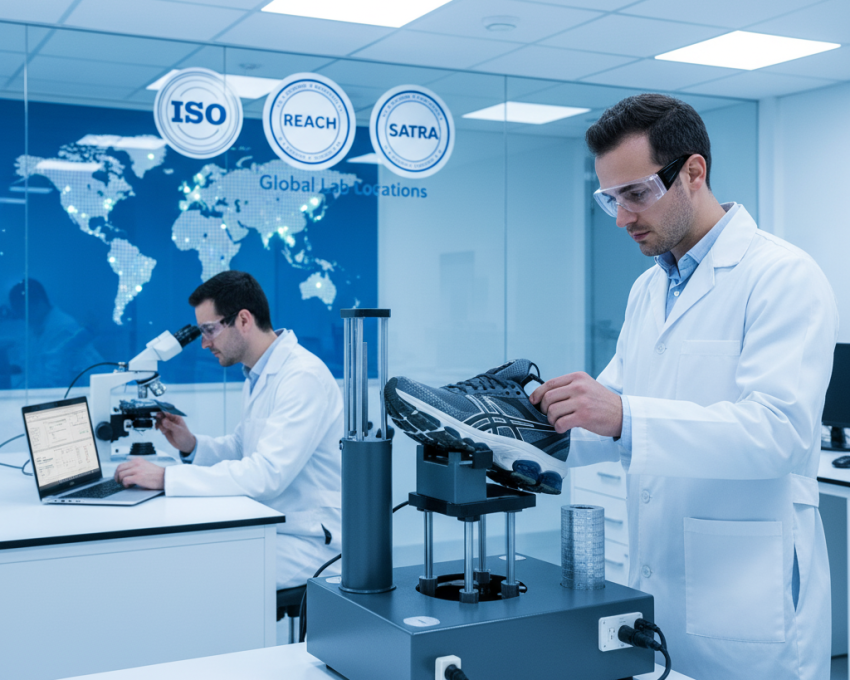
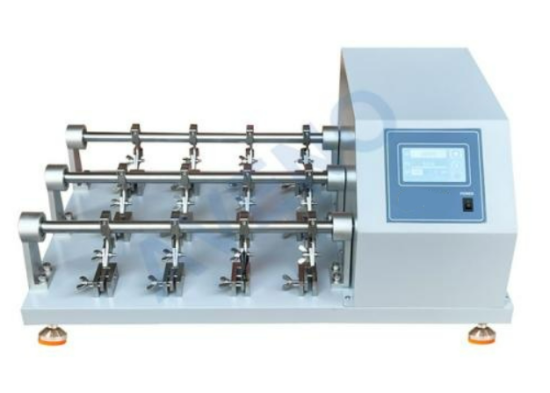
Flex resistance testing evaluates how upper materials behave under repeated bending during walking. One of the most widely used methods is SATRA TM55 – Flexing resistance of upper materials, commonly known as the Bally flex test. The test simulates repeated forepart flexing to assess surface cracking, finish failure, and grain break.
Flex performance is heavily influenced by leather substance, finishing chemistry, and thickness uniformity. Materials with heavy surface finishes often show early cracking even when the base leather structure is sound.
Pro Tip: When Bally flex failures occur, reducing finish thickness often improves performance more effectively than changing the leather grade. Excessive pigment loading is a frequent but overlooked cause of cracking.
Expert Advice: Always inspect failed samples under magnification. Many visible cracks originate from micro-fractures formed during finishing or boarding rather than during flex testing itself.
Reference – SATRA TM55:
Search “TM55” on the SATRA Test Method Directory.
🔗 https://new.satra.com/services/test-methods/test-method-list/
Abrasion Resistance of Upper Materials
Abrasion resistance testing determines how well upper materials withstand surface wear caused by rubbing during use. SATRA methods such as TM31 and TM173 are commonly applied to leather, textiles, and synthetic uppers.
Abrasion performance depends on fiber structure, surface coatings, and finish elasticity. While abrasion loss values provide quantitative data, they must be interpreted alongside visual damage patterns.
Pro Tip: Abrasion resistance values alone are misleading. Two materials with similar mass loss may show very different visual wear, which is far more relevant to consumer perception.
Expert Advice: Always review abraded samples visually and tactically. Surface roughening without fiber breakage may still be acceptable for many footwear categories.
Reference – SATRA Abrasion Methods:
Search “TM31” or “TM173” on the SATRA Test Method Directory.
🔗 https://new.satra.com/services/test-methods/test-method-list/

Water Vapour Permeability and Breathability
Breathability testing evaluates the ability of upper materials to transmit moisture vapour, directly affecting wearer comfort. SATRA methods such as TM47, TM172, and TM178 are used to assess water vapour permeability and absorption.
Materials with low breathability often contribute to discomfort, odour development, and heat build-up, particularly in closed footwear designs.
Pro Tip: Highly breathable materials may still feel uncomfortable if internal linings restrict moisture movement. Upper and lining systems must be evaluated together.
Expert Advice: Do not rely on breathability data from raw materials alone. Always test finished material combinations, including laminations and coatings.
Reference – SATRA TM47 / TM172 / TM178:
Search the TM numbers on the SATRA Test Method Directory.
🔗 https://new.satra.com/services/test-methods/test-method-list/
Colour Fastness and Rubbing Resistance
Colour fastness testing assesses resistance to colour transfer and fading during wear. SATRA methods such as TM8, TM167, and TM173 evaluate dry and wet rubbing performance.
Poor colour fastness not only affects appearance but can also lead to staining of socks, linings, and skin.
Pro Tip: Wet rubbing failures are often linked to incomplete fixation of dyes or pigments rather than poor leather quality.
Expert Advice: Always test colour fastness after conditioning. Freshly finished materials may pass initially but fail after humidity exposure.
Reference – SATRA Colour Fastness Methods:
Search “TM8”, “TM167”, or “TM173” on the SATRA Test Method Directory.
🔗 https://new.satra.com/services/test-methods/test-method-list/
Finish Adhesion and Film Stability
Finish adhesion testing evaluates how securely surface coatings bond to the substrate. SATRA methods such as TM148 and TM116 assess resistance to cracking, peeling, and delamination.
Finish failures often appear as flaking, whitening, or surface separation during flexing and wear.
Pro Tip: Finish adhesion problems frequently originate from poor surface preparation rather than coating formulation.
Expert Advice: Always review finishing parameters alongside test data. Spray pressure, drying temperature, and curing time strongly influence performance.
Reference – SATRA TM148 / TM116:
Search the TM numbers on the SATRA Test Method Directory.
🔗 https://new.satra.com/services/test-methods/test-method-list/
Common Misinterpretations in Upper Material Testing
A frequent mistake in factories is treating test results as pass/fail thresholds rather than diagnostic indicators. Variations in finish thickness, material thickness, and test conditioning often explain inconsistent results.
Expert Advice: Use testing trends to guide process improvement. Single failures should trigger investigation, not automatic material rejection.
Conclusion
Upper material testing is a critical foundation for footwear quality, comfort, and durability. When interpreted correctly, flex, abrasion, breathability, and colour fastness tests provide valuable insight into material behaviour under real-use conditions. Laboratories generate data, but engineering judgment transforms that data into better footwear.