Footwear Manufacturing Insights: Stitch-In Insoles Design and Bar-Tack Reinforcement for Structural Security
In footwear manufacturing, small design decisions made during pattern engineering often determine production efficiency and long-term product durability. Two frequently overlooked areas — stitch-in insole notch standardization and bar-tack reinforcement at stress points — play an important role in ensuring consistent assembly and preventing premature failure.
When properly engineered, these techniques simplify cutting operations, reduce tooling variation, and improve structural strength in finished footwear.
Posts you may like



Stitch-In Insoles for California Construction
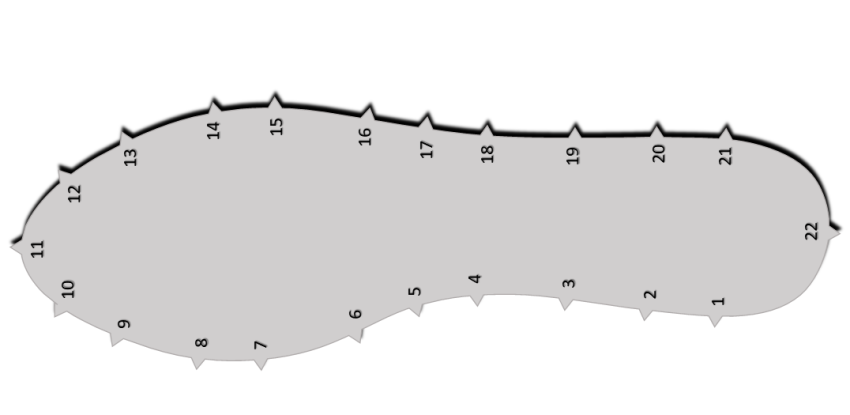
California construction requires the upper to be stitched directly to the insole, making alignment accuracy critical during closing and assembly. To simplify manufacturing, stitch-in insoles are designed so that only one standardized press knife set is required across multiple models.
Notch Arrangement Concept
The insole perimeter contains multiple reference notches — typically around twenty or more — positioned strategically along the edge. These notches serve as alignment guides during stitching and component positioning.
Instead of maintaining equal spacing, the notch positions are adapted according to functional requirements such as:
- Toe opening areas
- Heel openings
- Open-toe or open-heel footwear designs
- Model-specific construction needs
During production, operators only need to mark the relevant notch numbers on upper components. Even when parts fall between two notches, the system still allows accurate positioning.
Manufacturing Advantages
- Reduces the number of cutting knives required
- Standardizes tooling across styles
- Improves stitching alignment consistency
- Speeds up closing operations
- Minimizes operator dependency
Expert Insights: Standardized notch systems transform complex style variations into controlled production processes. Many factories reduce tooling investment significantly by designing insoles around universal reference geometry.



Bar-Tack Reinforcement for Security in Upper Construction
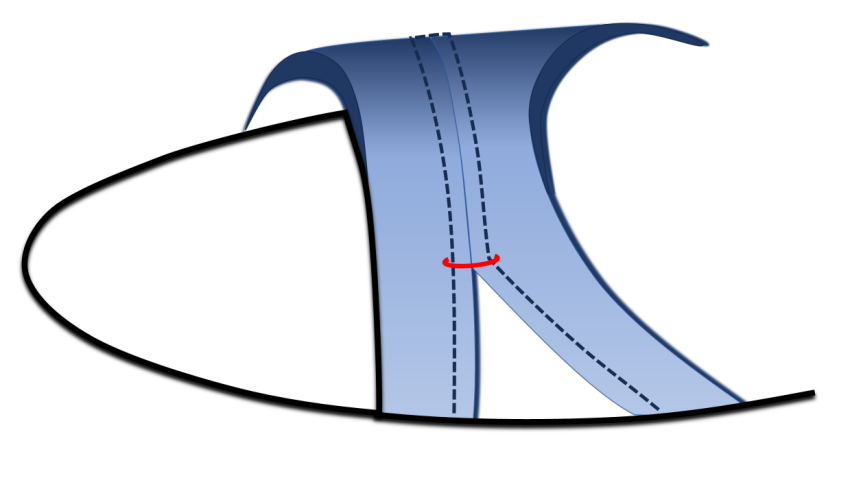
Certain footwear designs create localized stress points where upper components intersect or where incisions are introduced for styling or flexibility. Without reinforcement, these areas may tear during wear.
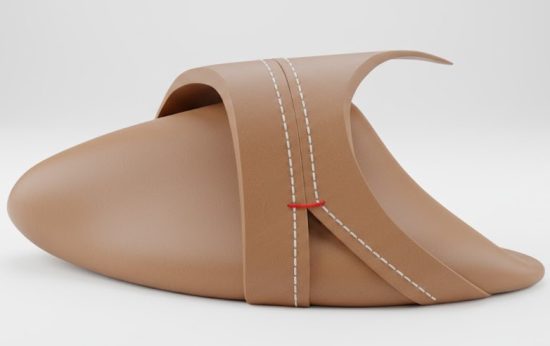
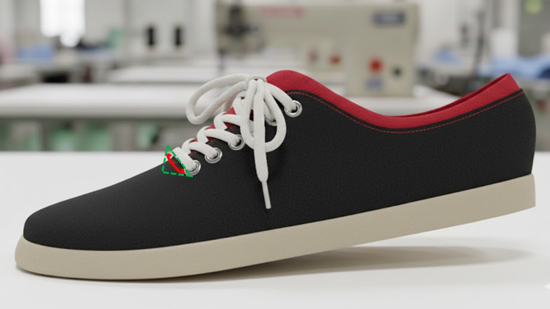
A common weak location appears where straps or upper sections divide across the vamp area.
Purpose of Bar-Tacking
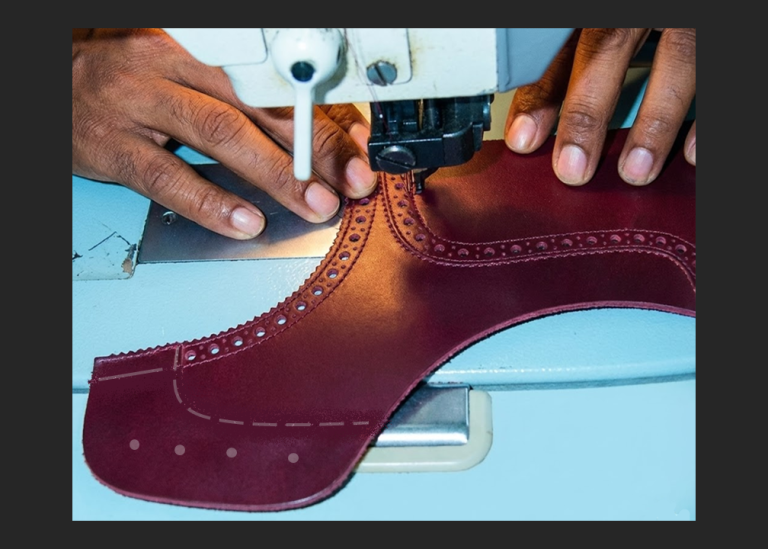
Bar-tack stitching is applied at identified stress points to prevent tearing and distribute load across a wider area. The reinforcement locks stitch lines together and stabilizes material movement.
In sandal or casual models, applying a bar-tack at critical intersection points significantly increases durability.
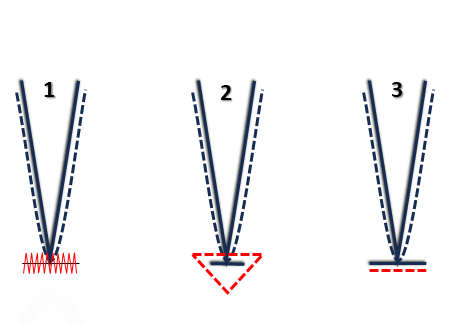
Bar-Tacking of Incisions
When decorative or functional cuts are introduced into the vamp, reinforcement becomes essential. Several bar-tack orientations may be used depending on stress direction:
- Vertical reinforcement for pull resistance
- Angled reinforcement for multidirectional stress
- Cross reinforcement for maximum security
The selected method depends on material type and expected flex behavior.
Production Benefits
- Prevents tearing complaints
- Improves seam strength at weak zones
- Extends footwear lifespan
- Reduces warranty and rejection cases
- Enhances consumer confidence
Expert Insights: Most tearing failures originate at design transition points rather than material defects. Early reinforcement planning during pattern development eliminates costly corrective actions later in production.


Conclusion
Efficient footwear manufacturing depends on intelligent design standardization combined with preventive reinforcement techniques. Stitch-in insole notch systems simplify tooling and alignment, while bar-tack reinforcement protects vulnerable stress areas from failure.
Although these solutions appear simple, they significantly improve manufacturing efficiency, product durability, and overall process reliability.
Factories that integrate such engineering controls during development achieve stronger quality outcomes without increasing production complexity.