
Footwear Manufacturing Insights: Leather Storage Control and Heel Strap Alignment for Precision Assembly
In footwear manufacturing, quality does not depend only on complex machinery or advanced materials. Instead, many production problems originate from small operational practices inside cutting and closing departments. Proper leather storage management and accurate component alignment directly influence material utilization, product symmetry, and assembly efficiency.
Two practical factory techniques — FIFO-based leather storage identification and heel strap alignment control — help manufacturers maintain consistency while reducing waste and rework.
Posts you may like



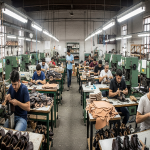
Leather Storage Control Using FIFO Identification
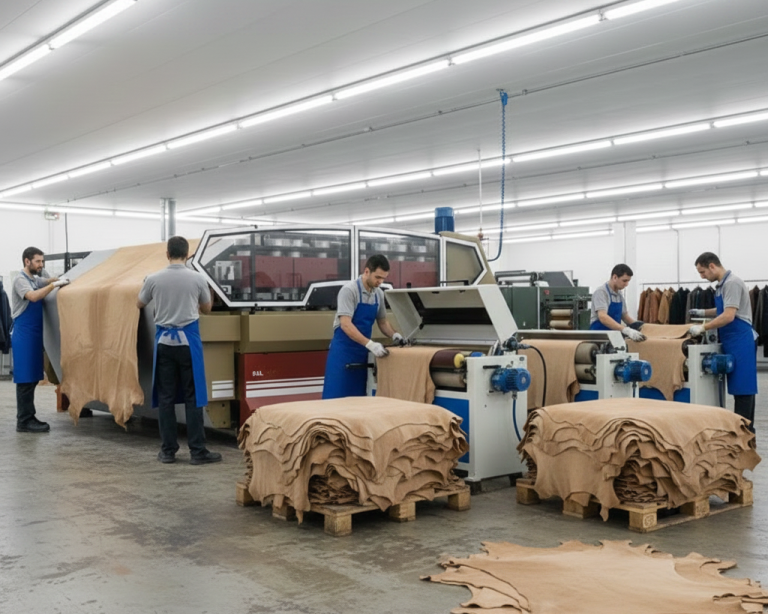
Leather is a natural material whose behavior changes over time depending on storage duration, humidity, and environmental exposure. Therefore, factories must ensure that stored materials are consumed in the correct sequence.
To achieve this, production units commonly apply the FIFO (First-In, First-Out) principle.
Practical Factory Method
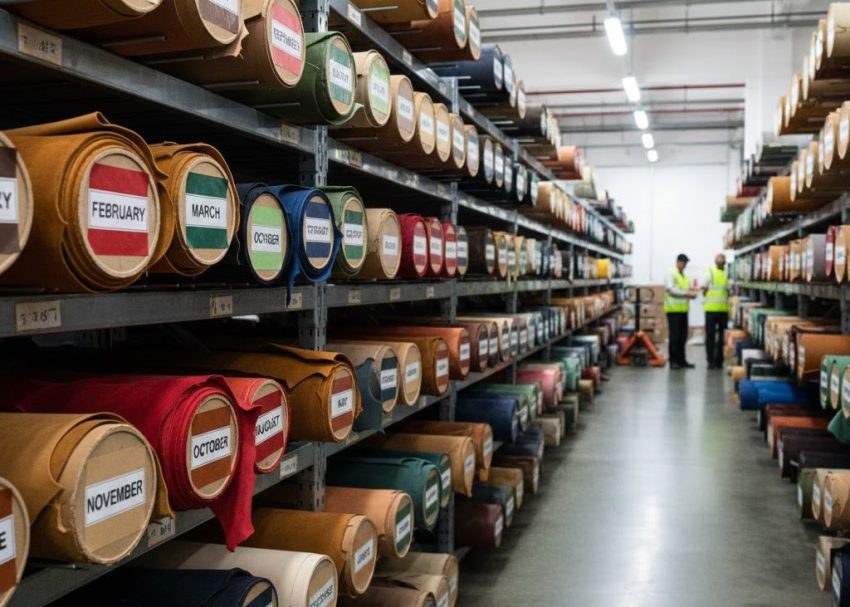
Individual leather batches are marked using colored adhesive tapes. Each color represents a defined storage period, allowing operators and supervisors to immediately recognize which batch must be used first.
A typical example follows a two-month identification cycle:
- January / July — White
- February / August — Red
- March / September — Light Green
- April / October — Light Brown
- May / November — Dark Green
- June / December — Dark Brown
Because workers can visually identify batches without checking documentation, material rotation becomes faster and more reliable.
Manufacturing Advantages
- Prevents ageing-related leather stiffness
- Reduces shade variation between production lots
- Improves cutting yield consistency
- Minimizes material wastage
- Simplifies warehouse supervision
Expert Insights: Many factories invest heavily in material inspection but overlook storage discipline. However, improper rotation often creates more quality variation than grading differences. Visual FIFO systems remain one of the lowest-cost improvements with immediate results.


Aligning Heel Straps for Accurate Assembly
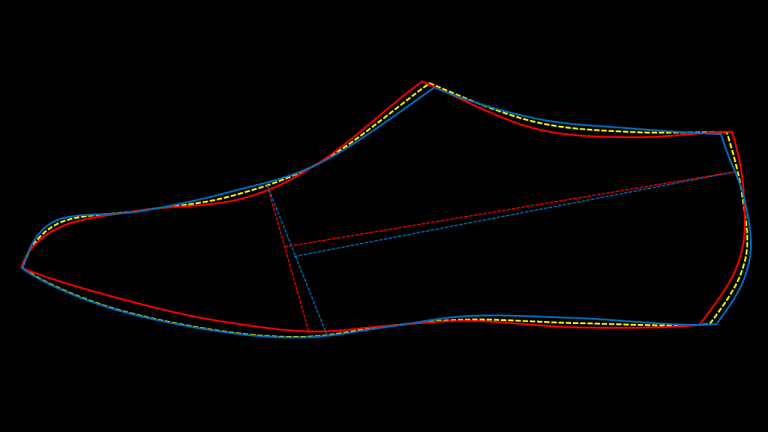
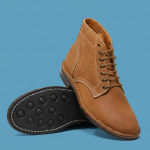
In sandal and fashion footwear production, heel strap positioning requires extremely high accuracy. Even a deviation of 1 mm during stitching can create several centimeters of misalignment at the heel after lasting and affect Shoe Fitting.
Therefore, experienced manufacturers avoid direct stitching alignment and instead pre-position components before sewing.
Alignment Technique
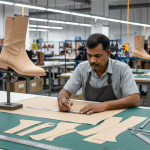
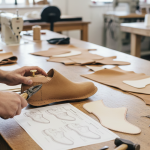
Heel straps are temporarily fixed onto the vamp prior to stitching. A thick cardboard positioning pattern is used where recesses are created for both the vamp and strap components.
Operators place parts inside the template, ensuring automatic positioning before joining.
Why This Method Works
- The template eliminates operator judgement variation
- Component positioning becomes repeatable
- Alignment remains consistent across production lines
- Assembly speed improves significantly
Production Benefits
- Prevents heel misalignment defects
- Reduces rejection during lasting
- Improves visual symmetry of sandals
- Decreases operator dependency
- Supports line standardization
Once positioned within the pattern, stitching proceeds with minimal correction required.
Expert Insights: Most heel alignment defects originate during closing, not lasting. Introducing simple positioning jigs often removes recurring quality problems without changing machines or operator skills.




Conclusion
Footwear manufacturing excellence often depends on disciplined execution of small operational controls. FIFO-based leather storage prevents material inconsistency, while template-guided heel strap alignment ensures assembly precision.
Although these methods appear simple, they significantly improve quality stability, reduce waste, and enhance production efficiency. Factories that standardize such practical solutions achieve stronger process control without major investment.