Post-Cutting Inspection & Housekeeping in Footwear Cutting Operations
Estimated Reading Time: ~ 5 – 6 minutes
Why Post-Cutting Checks Matter
In footwear manufacturing, quality control does not end when the cutting machine stops. Instead, the actions taken after cutting play an equally important role in product quality and workplace safety. Proper inspection, labeling, storage, and documentation help prevent material loss, reduce production errors, and create a safer working environment.
Moreover, a well-managed post-cutting routine improves communication between departments. As a result, factories achieve better traceability and more consistent product quality across every batch.traceability, and maintains consistent product quality across batches.

Essential Post-Cutting Responsibilities
1. Quantity Verification and Proper Stacking
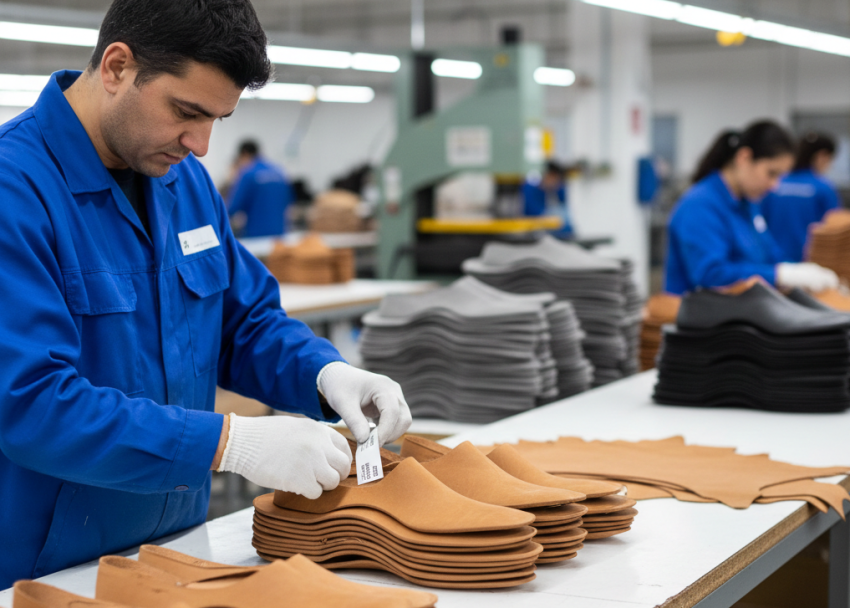
Once cutting is completed, the cutter must first confirm that the correct number of components has been produced for each style and size. This simple step helps avoid shortages and delays in later processes.
To support this process:
- Cut pieces should be stacked (Ideally 12 pairs / Bundle) neatly and carefully
- Stacks must remain stable to avoid bending or damage
- Components should be easy to count and transfer
In addition, neat stacking improves the appearance of the workplace and makes handling easier for the next department.
2. Clear Identification Through Labeling
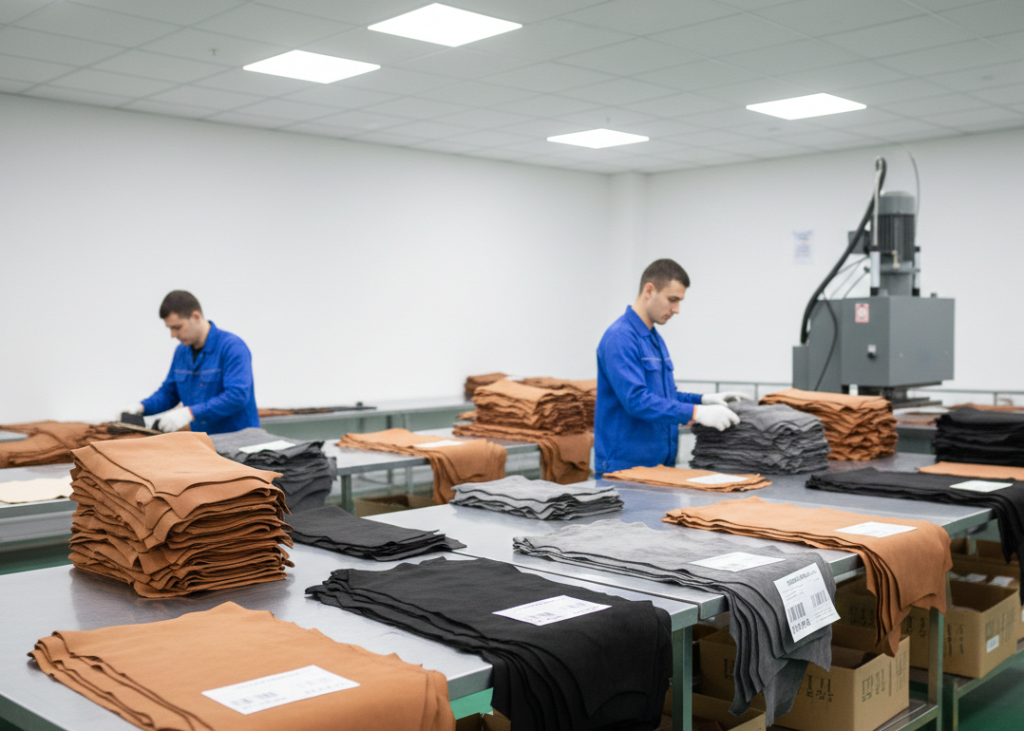
Every stack of cut components must be clearly labeled. In this way, teams can avoid confusion during stitching and assembly. Labels should include style number, size, color, and quantity.
For materials with colour or grain variation, extra care is needed. These components are usually match-marked to ensure visual consistency.
Therefore, cutters should always keep matching parts together and mark them clearly as specific pairs.
This practice helps maintain a uniform look in the finished footwear.
In such cases:
- Matching parts must be identified as specific pairs
- Labels should clearly indicate that the pieces belong together
- Mixing with other components must be avoided
This practice ensures a uniform appearance in finished footwear.
3. Organized Scrap Management
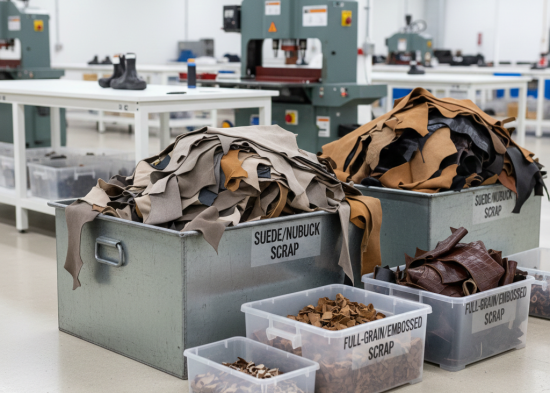
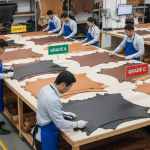
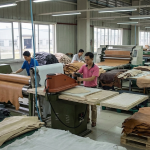
Leather scrap is a natural result of the cutting process. However, how it is handled makes a big difference to cleanliness and efficiency. Scrap should never be left scattered around the cutting area.
Instead, it must be:
- Collected immediately after cutting
- Stored neatly in the designated scrap container
- Separated where required into reusable and waste material
As a result, the cutting room stays clean, and the factory gains better control over material usage.
4. Storage of Usable Leftover Leather
Not all leftover leather is waste. In fact, many pieces can still support sampling, small parts, or repair work. These usable remnants must be treated as valuable material.
After cutting, such pieces should be:
- Measured accurately
- Stored according to company storage rules
- Recorded for future reference
This approach reduces waste and supports more sustainable production practices.
5. Safe Handling and Storage of Dies
Cutting dies are precision tools. Therefore, proper handling after use is essential for maintaining cutting quality. Once the job is complete, all dies must return to their correct storage location.
Good die management includes:
- Storing dies in the assigned racks or cabinets
- Protecting them from damage and rust
- Keeping them ready for the next production run
As a result, factories reduce downtime and avoid unnecessary replacement costs.
6. Accurate Cutting Ticket Documentation
Documentation is an essential part of professional manufacturing. After completing the cutting job, all relevant details must be written clearly on the cutting ticket.
This includes:
- Job completion information
- Quantity produced
- Any observations or deviations
In this way, supervisors can track production more easily and support quality audits with accurate records.


7. Cutting Board Maintenance
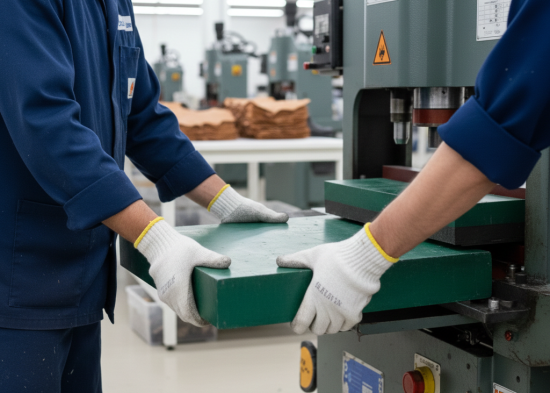
The cutting press block plays a key role in achieving clean cuts. For this reason, regular inspection should never be ignored.
Standard good practice includes:
- Rotating the board every four hours
- Flipping it over once every day
As a result, the block lasts longer and continues to support accurate cutting.
8. Keeping the Work Area Ready
A clean and organized working area is essential for safety and efficiency. Therefore, before leaving the station, the cutter should always prepare the area for the next task.
This means:
- Removing unnecessary materials
- Clearing tools from walkways
- Leaving the area tidy and safe
onsequently, the risk of accidents decreases and workflow improves.
9. Reporting Problems and Continuous Improvement
During cutting, issues such as material defects or machine problems may appear. Instead of ignoring them, cutters should report these issues immediately.
Instead, they must be:
- Recorded clearly
- Discussed with the supervisor as soon as possible
This practice helps the team solve problems faster and prevent the same issues from happening again.
Conclusion
Post-cutting inspection is not just a routine task. Instead, it is a critical quality control stage in footwear manufacturing. When cutters follow clear practices for labeling, scrap handling, die storage, documentation, and housekeeping, the entire production line benefits.
As a result, factories achieve higher product consistency, lower material waste, safer working conditions, and better overall efficiency.
By strengthening post-cutting procedures, footwear factories build a strong foundation for long-term quality and operational excellence.