The Complete Guide to Choosing and Fitting Shoes for Babies and Infants (0–30 Months)
Estimated Reading Time: ~4 minutes
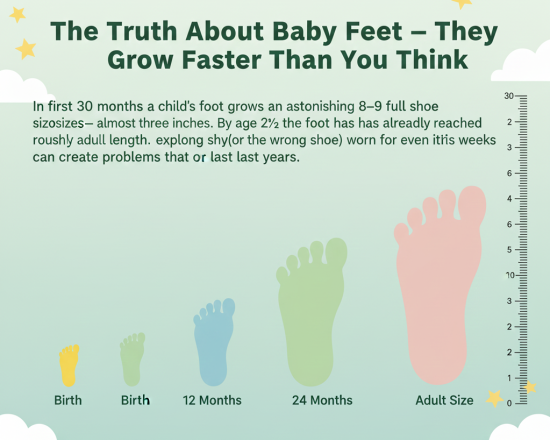
The Truth About Baby Feet – They Grow Faster Than You Think
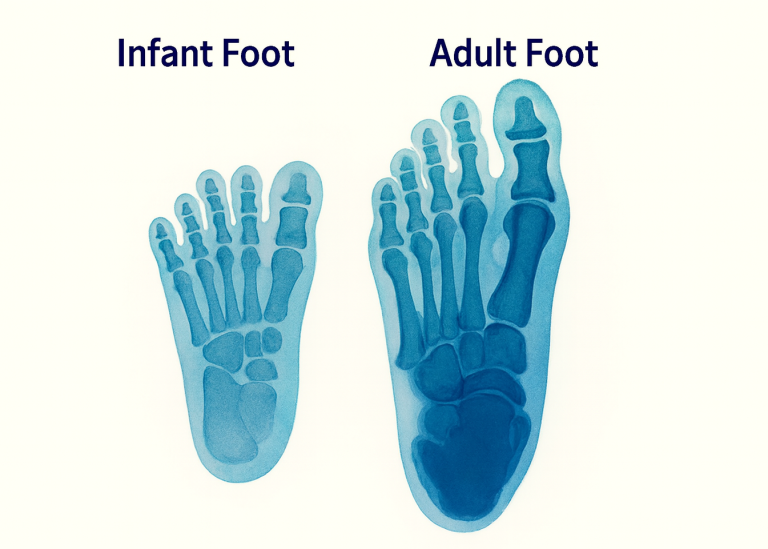
In the first 30 months a child’s foot grows an astonishing 8–9 full shoe sizes — almost three inches. By age 2½ the foot has already reached roughly half its final adult length.
This explosive growth is why the wrong shoe (or an outgrown shoe) worn for even a few weeks can create problems that last years.
The Single Most Important (and Most Overlooked) Part of Baby Shoe Fit: The Throat
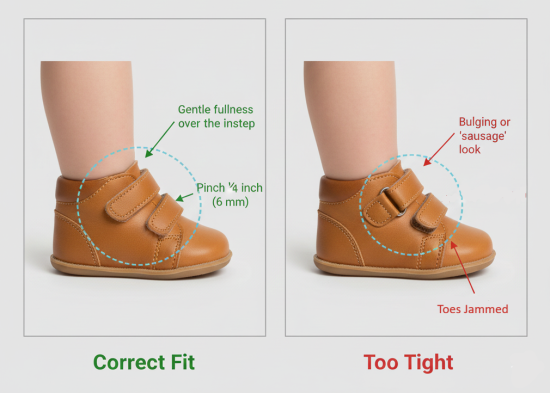
Over 75 % of growth happens behind the ball of the foot. If the throat (the area across the instep) is too tight, the foot cannot slide forward as it grows — even if there is plenty of space at the toes.
Signs of perfect throat fit when the child is standing:
- No bulging or “sausage” look at the sides
- Gentle fullness over the instep
- You can pinch about ¼ inch (6 mm) of leather on the vamp
If the throat is too loose the foot slides forward and jams the toes — exactly the same effect as an outgrown shoe.
Exactly How Much Growing Room Should You Leave?
Forget the old “one thumb’s width” rule — that equals almost three full sizes and creates tripping hazards.
Quality infant shoes already have about ½ inch (1¼ sizes) built-in growing room. When the child stands with weight evenly distributed you should see:
- ¼ to ⅜ inch (6–9 mm) between the longest toe and the end of the shoe
- Toes lying flat and relaxed, never curled
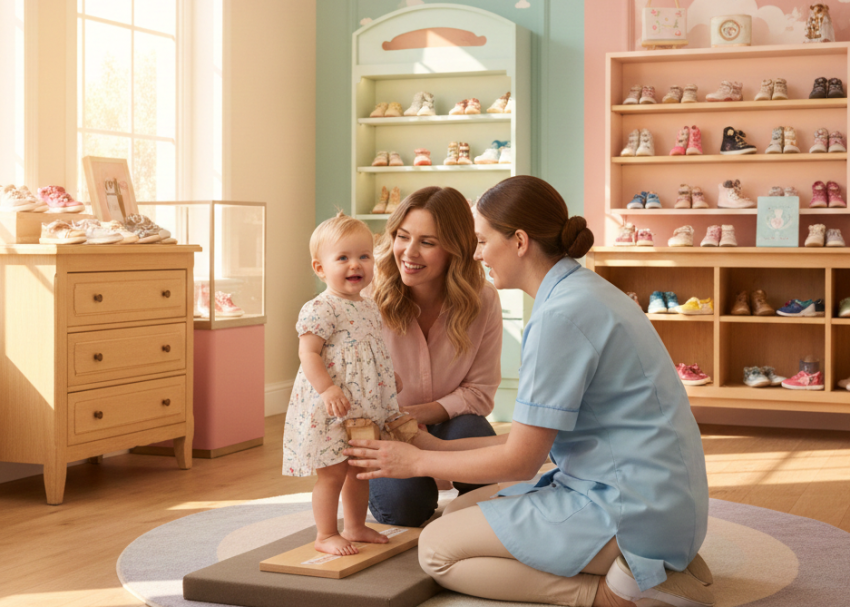
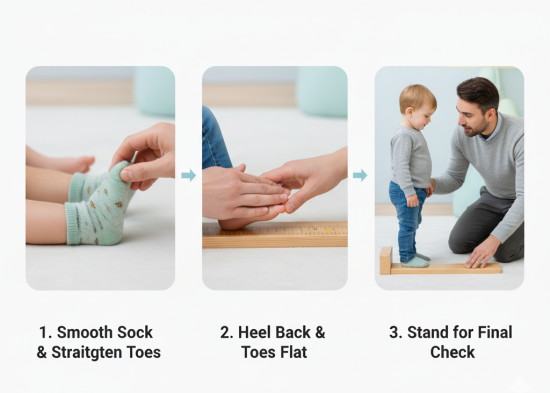
Measuring a Baby Foot the Professional Way
- Have the child stand with full weight for the final length check.
- Pull the sock completely smooth and pull the toes forward.
- Place heel firmly against the back of the device.
- Gently press across the tops of the toes so they straighten.
- Always measure both feet — fit the larger one.


High-Top vs Low-Cut Shoes – What Decades of Research Says…
After reviewing millions of children worldwide:
- There is no proof that high-top shoes provide meaningful ankle support
- There is no proof that low-cut shoes weaken feet
- Tight lacing of high-tops can restrict circulation
2025 conclusion: Both are safe. Choose based on style and how easily the shoe stays on the foot.
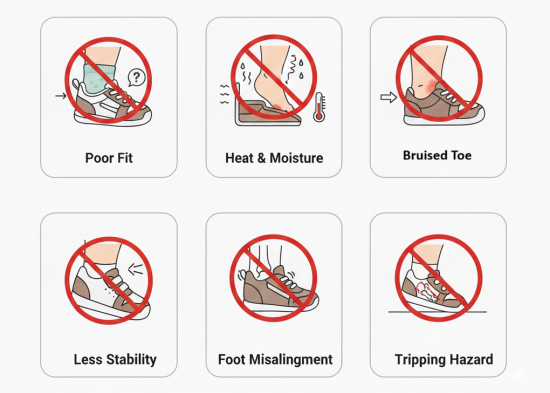
The 7 Reasons Professionals Limit Everyday Sneaker Use in Babies
- Most come in only one width → frequent poor fit
- Thick rubber soles create heat and moisture buildup
- “Sticky” rubber causes the foot to slide forward → bruised toes
- Extra-thick soles are actually stiffer than many leather soles
- Rounded sole edges reduce stability
- Sunken ball area can affect metatarsal alignment long-term
- Higher tripping risk from sudden stops
Sneakers are fine for occasional outdoor play in warm weather. They are not healthier as daily shoes.
When Does a Baby Actually Need Shoes? The 4 Natural Stages
| Stage | Age range | Best footwear choice |
|---|---|---|
| Crib / sleeping | 0–7 months | Soft bootees or barefoot — shoes are decorative only |
| Standing in playpen | 7–11 months | Soft high-top “pre-walker” or “training” shoes |
| First real steps | 11–15 months | Flexible flat sole, soft leather upper |
| Confident walker | 15–30 months | Supple leather, semi-flexible sole, wide stable base |
Many quality brands now offer “progressive” ranges designed exactly for these stages.
How Often Should You Buy New Shoes?
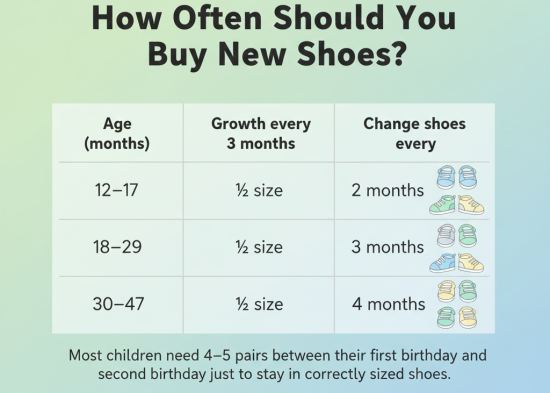
| Age (months) | Growth every 3 months | Change shoes every |
|---|---|---|
| 12–17 | ½ size | 2 months |
| 18–29 | ½ size | 3 months |
| 30–47 | ½ size | 4 months |
Most children need 4–5 pairs between their first birthday and second birthday just to stay in correctly sized shoes.
10 Pieces of Advice Every Parent Needs to Hear
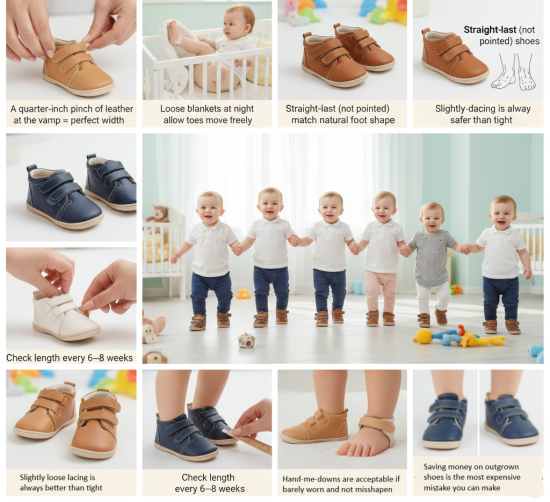
- Check length every 6–8 weeks even if the shoes “still look fine”.
- Never let socks or pajama feet turn under the toes.
- Leather breathes best — choose it for everyday wear.
- Hand-me-downs are acceptable if barely worn and not misshapen.
- Loose blankets at night allow toes to move freely.
- Slightly loose lacing is always safer than tight.
- A quarter-inch pinch of leather at the vamp = perfect width.
- Straight-last (not pointed) shoes match natural foot shape.
- Square or round toe boxes give growing toes freedom.
- “Saving money” on outgrown shoes is the most expensive mistake you can make.
Final Thought
A baby’s foot is soft, fast-growing and completely dependent on the adults around it. One correct fitting today can prevent years of problems tomorrow.
Measure often, choose leather, prioritise throat fit, change sizes on schedule and enjoy watching those confident first steps.