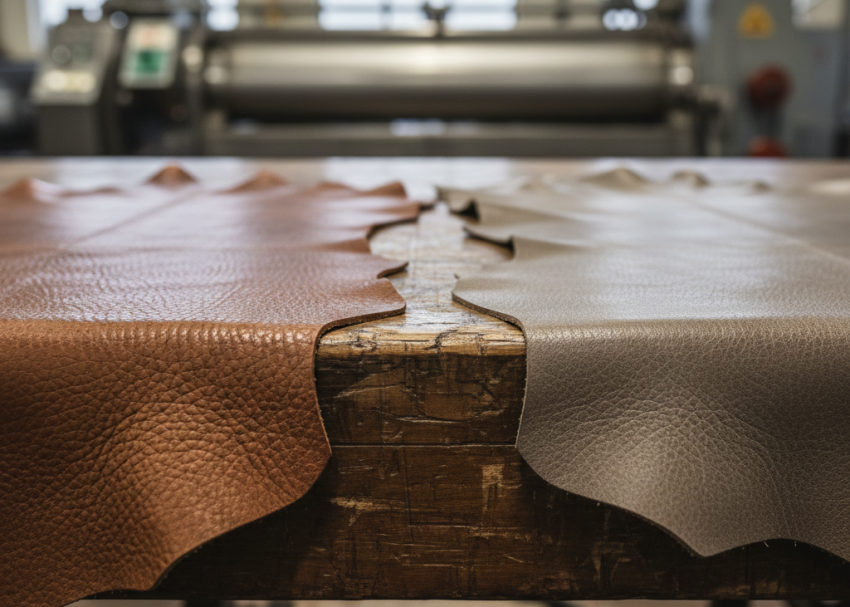
Retanning in Leather Manufacturing: Complete Guide to Types, Processes, and Applications
Estimated Reading time: ~ 7 minutes
Introduction
Retanning in leather manufacturing is a critical secondary tanning process that defines the final performance, appearance, and usability of leather. While primary tanning stabilizes the hide, retanning determines whether the leather becomes suitable for footwear, garments, upholstery, or luxury leather goods.
From a technical perspective, retanning controls fiber structure, grain tightness, softness, fullness, and durability, making it one of the most important stages in modern tannery operations.
What Is Retanning in Leather Manufacturing?
Retanning is the second tanning stage applied after primary tanning, such as chrome tanning, vegetable tanning, aldehyde tanning, or metal-free tanning.
Technically, retanning modifies the internal collagen fiber network. It balances residual chemicals, improves mechanical strength, enhances dye uptake, and prepares leather for finishing processes. Without retanning, leather remains chemically stable but fails to meet industrial performance standards.
Why Retanning Is Important
Different leather products demand different performance characteristics. Retanning allows tanneries to custom-engineer leather according to end-use requirements.
Main Functions of Retanning
- Improves fullness and body for structured leather
- Enhances softness and flexibility for comfort
- Tightens grain for smooth and uniform surfaces
- Increases resistance to wear, tear, and moisture
- Balances pH and neutralizes residual tanning agents
Pro Tip : Retanning Sequence Matters
Always introduce syntans before resins when grain tightness is critical. Reversing the sequence can lock fibers too early and reduce dye penetration..
Types of Retanning Processes in the Leather Industry
1. Semi-Chrome Retanning
Semi-chrome retanning combines vegetable tanning and chrome tanning to achieve a balance between natural appearance and technical stability.
Leather is first vegetable tanned and then re-tanned with chrome salts. This process produces firm leather with improved dimensional stability and resistance to environmental stress.
Key properties:
- Strong and durable fiber structure
- Improved moisture resistance
- Good firmness and body
Common uses:
- Footwear uppers, belts, saddlery, heavy leather articles.


2. Vegetable Retanning (Vegetable Re-Tanned Leather)
Vegetable retanning involves retanning chrome-tanned leather with natural tannins such as mimosa, quebracho, and chestnut.
This method enhances natural aesthetics and improves finishing behavior, making it ideal for premium leather goods.
Key properties:
- Warm, natural color tones
- Improved firmness and fullness
- Excellent embossing and burnishing
Common uses:
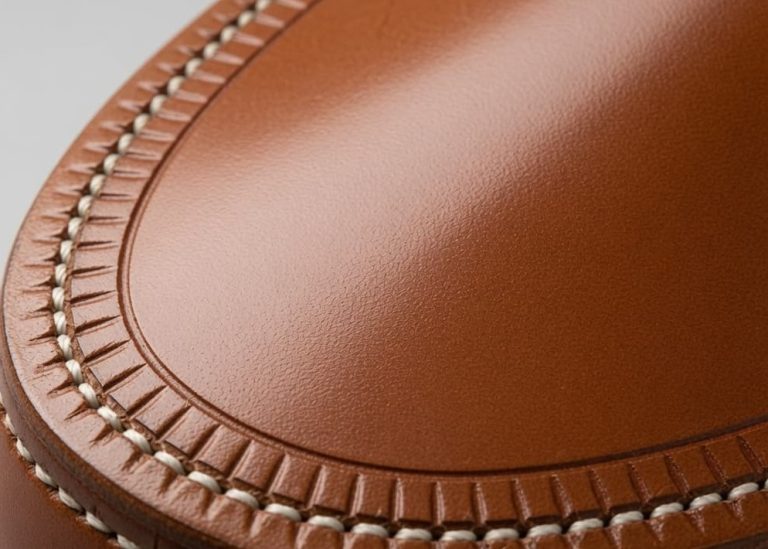
- Luxury bags, wallets, small leather goods, premium footwear.
Pro Tip: Footwear Leather Needs Controlled Firmness
For footwear uppers, avoid excessive vegetable retanning alone. A semi-chrome or combination retanning system gives better flex resistance during lasting and wear.
3. Resin Retanning
Resin retanning uses acrylic, melamine, or dicyandiamide resins to improve leather structure and thickness.
Resins penetrate the leather fiber network, providing controlled firmness and improving cutting yield for industrial production.
Key properties:
- Increased body and thickness
- Better shape retention
- Enhanced mechanical strength
Common uses:
- Footwear leather, upholstery leather, automotive interiors.
Pro Tip: Over-Retanning Is a Common Quality Issue
Excess resin or vegetable tannin causes:
– Grain break
– Poor softness recovery
– Cracking after finishing
Always evaluate dry feel and flex behavior, not just thickness.
4. Synthetic Retanning (Syntan Retanning)
Synthetic retanning agents, commonly known as syntans, are based on phenolic or naphthalene compounds.
Syntan retanning improves grain tightness, dye penetration, and color uniformity, especially in light-colored leathers.
Key properties:
- Improved dye uptake and levelness
- Better lightfastness
- Reduced chrome content
Common uses:
- Garment leather, automotive leather, fashion leather.
Pro Tip: Retanning Impacts Finishing Cost
Well-balanced retanning reduces:
– Excess finish coating
– Corrective pigment layers
– Rejection due to loose grain
👉 Good retanning = lower finishing cost.
5. Polymer Retanning
Polymer retanning uses acrylic or polyurethane polymers to enhance softness and elasticity. This retanning system is critical for applications where comfort, drape, and flexibility are essential.
Key properties:
- Soft and smooth hand feel
- High elasticity
- Improved wearer comfort
Common uses:
- Garment leather, upholstery leather, soft linings.
6. Oil and Fatliquor Retanning
Oil and fatliquor retanning introduces lubricating oils into the leather during retanning to prevent fiber sticking and brittleness.
This step is essential for producing supple and flexible leather.
Key properties:
- High softness
- Improved flex resistance
- Reduced cracking risk
Common uses:
Gloves, napa leather, lamb leather, soft garments.
7. Combination Retanning
Combination retanning is the most widely used retanning method in commercial tanneries. It blends syntans, resins, vegetable tannins, polymers, and oils to achieve balanced performance.
This approach allows precise control over leather properties.
Key properties:
- Balanced firmness and softness
- Good durability and appearance
- Application-specific performance
Common uses:
- Footwear leather, upholstery leather, high-end fashion.
Retanning Selection Based on End Use
Selecting the correct retanning system is critical for performance and cost efficiency.
- Footwear leather: Semi-chrome, resin, or combination retanning
- Garment leather: Polymer and oil retanning
- Upholstery leather: Synthetic and resin retanning
- Luxury goods: Vegetable retanning
Environmental and Technical Considerations in Retanning
Retanning chemicals directly influence wastewater load and environmental impact. Over-retanning can cause stiffness and brittleness, while under-retanning results in weak grain and poor durability.
Modern tanneries increasingly adopt eco-friendly syntans, low-formaldehyde resins, and optimized retanning recipes to meet sustainability standards.
Conclusion
Retanning in leather manufacturing is the engineering stage that defines final leather quality. By selecting the correct retanning process—semi-chrome, vegetable, resin, synthetic, polymer, oil, or combination—tanneries can produce leather tailored precisely for footwear, garments, upholstery, and luxury goods.