General Rules Before Starting Any Cutting Job: Footwear Manufacturing Cutting
Estimated Reading Time: ~ 5 – 6 minutes
Introduction
In footwear manufacturing, cutting is not just a technical operation—it is a quality gateway. Every mistake made at this stage travels through stitching, lasting, and finishing. That is why cutters must follow a clear set of general rules before starting any cutting job. These rules protect people, machines, and materials while ensuring that production meets brand and factory standards.

The Importance of Pre-Cutting Discipline
A well-prepared cutting operation reduces risks, improves yield, and builds consistency. Before the first component is cut, the cutter must confirm that the workplace, equipment, tools, and materials are all ready. This preparation is not optional—it is a professional responsibility.
General Rules Before Starting Any Cutting Job
Safe and Organized Work Environment
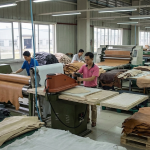
A safe cutting process begins with the workplace itself. The cutter must ensure that the working area is clean, tidy, and free from hazards. Any trailing wires, loose materials, or obstacles should be removed so that the standing position is stable and secure. Adequate lighting is equally important, as poor visibility increases the risk of cutting errors and accidents.
Key safety checks include:
- Clean and clutter-free floor area
- No loose cables or obstructions
- Clear standing space for the cutter
- Sufficient lighting over the cutting zone
Press Area and Beam Movement
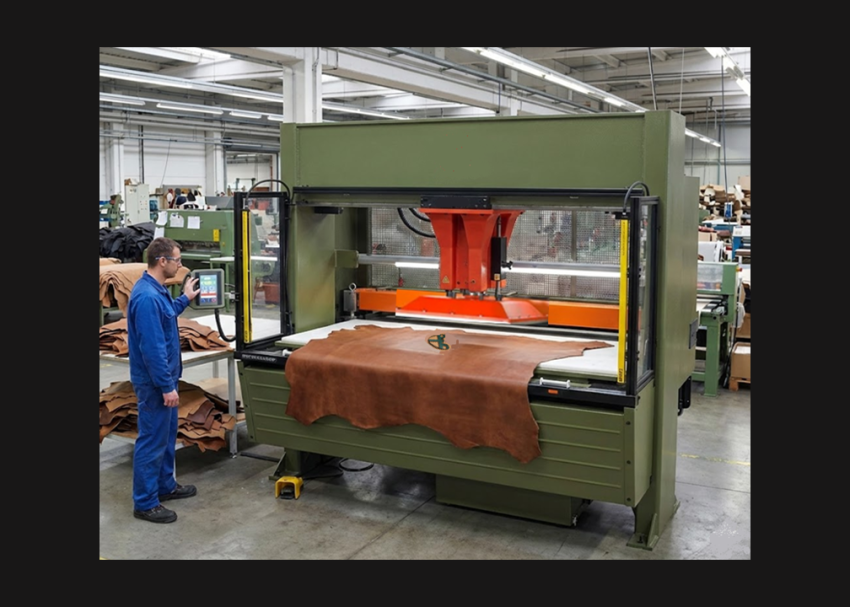
The cutting press must always be treated as a safety-critical machine. Before starting, the area around the press should be completely clear. The beam must be able to swing freely through its full range of movement without hitting any object. Restricted movement can cause uneven cutting and serious safety risks.
The cutter should confirm that:
- No tools or materials are placed near the beam path
- The press is stable and ready for operation
- Emergency access around the machine is not blocked
Cutting Block and Striker Plate Condition
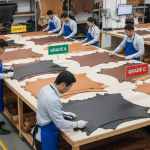
The cutting block plays a major role in cut quality. A worn or uneven block leads to poor edge definition and faster die damage. The cutter must check that the block is flat, unworn, and correctly positioned on the press. If the factory uses a color-coding system to manage block rotation, the correct color should always be visible.
At the same time, the underside of the striker plate must be inspected. Any cracks, dents, or damage can affect pressure distribution and must be reported immediately.
Correct Beam Height Setting
Beam height adjustment is one of the most important technical checks before cutting. The correct setting ensures clean cuts without damaging dies or machinery.
To set the beam height correctly:
- Place a representative die on the material to be cut
- Lower the beam slowly
- Adjust until the gap between the die and striker plate is 8 mm
This small adjustment makes a big difference in cutting accuracy and tool life.quality parameter that must guide every cutting decision.
Tool and Material Verification
Understanding the Cutting Ticket
The cutting ticket is the cutter’s main instruction document. Before starting work, it must be read carefully and fully understood. If any detail is unclear, the cutter should consult the supervisor rather than making assumptions.
The ticket normally confirms:
- Component type and quantity
- Material specification
- Quality level required
- Special instructions, if any
Clear understanding at this stage prevents costly mistakes later.
Die Inspection and Suitability
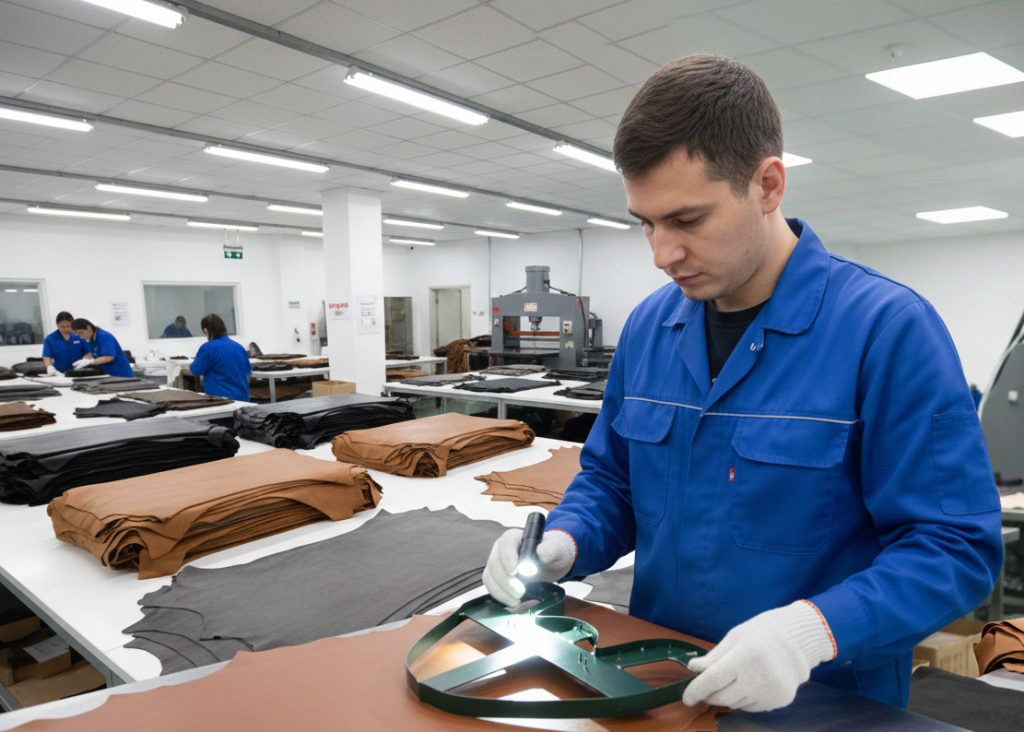
Using the wrong or damaged die can affect both safety and product quality. Every die supplied must match the cutting ticket exactly. Before cutting begins, the cutter should inspect each die carefully.
Dies must be checked for:
- Broken or bent support bars
- Cracks in the frame
- Dull, chipped, or uneven cutting edges
Only dies in good condition should be approved for use.
Leather and Material Confirmation
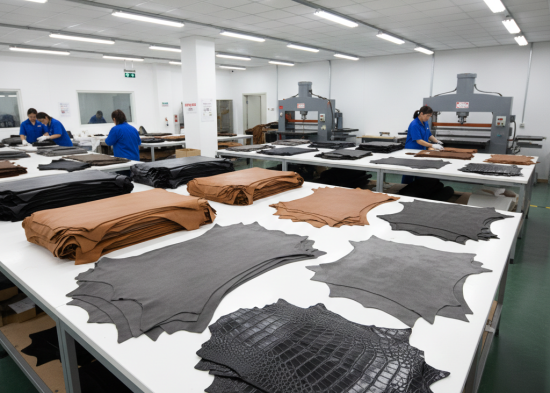
The cutter must also verify that the leather or material provided matches the cutting ticket. This includes checking the type of leather, typical skin size, usability level, and surface condition. If the material differs significantly from what is specified, cutting should stop until the supervisor confirms how to proceed. This protects both quality standards and production accountability.

Work Organization and Quality Control
Proper Stacking and Inspection Area
After cutting, components must be placed in a dedicated inspection area. This space should be clean, tidy, and well lit, allowing inspectors to check quality without confusion or damage. Sufficient working space also prevents mixing of sizes, colors, or styles.
A good stacking area ensures:
- Reduced handling damage
- Better workflow between departments
- Easy inspection
Clear Understanding of Quality Standards
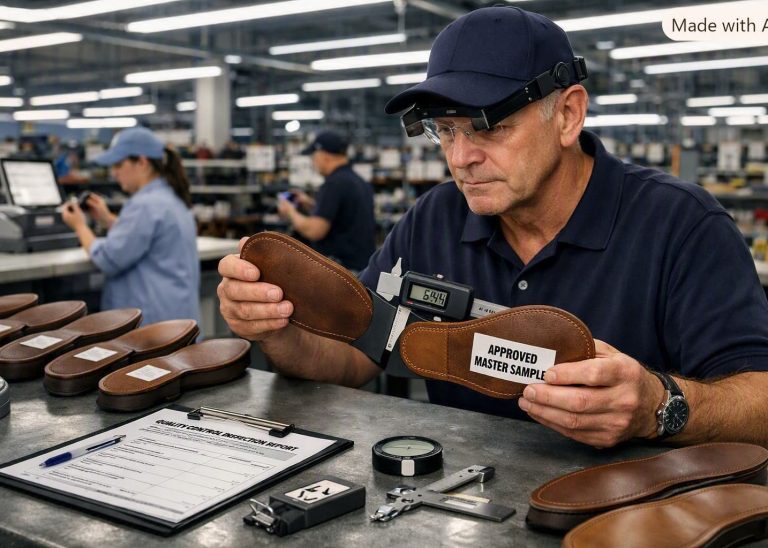
Every cutter must know exactly what quality level is required. This means having access to a reference sample—such as an approved upper or skin—that clearly shows which surface features are acceptable and where they are allowed. Areas such as lasting allowance zones, overlays, and strips must be clearly understood so that defects are not introduced at the cutting stage.
Sorting Skins for Consistency
Before cutting begins, skins should be sorted in order based on quality, thickness, and surface condition. This simple step supports consistent cutting performance and helps maintain uniform appearance across the batch. Proper sorting also makes it easier to allocate better material to visible components and manage lower grades effectively.
What Happens When Rules Are Ignored
Ignoring these general rules leads to more than just small errors. It increases the risk of accidents, damages tools and machines, raises rejection rates, and creates problems during stitching and lasting. Over time, this results in higher costs, production delays, and loss of customer confidence.
Conclusion
Cutting is the foundation of footwear manufacturing quality. By following these general rules before starting any cutting job, cutters create a safe, efficient, and quality-focused working environment. These checks may seem simple, but together they form a professional discipline that protects people, machinery, and materials—while ensuring that every shoe starts its journey the right way.