Blooming in Rubber, TPU and TPR Footwear Outsoles: Causes, Test Methods and Preventive Solutions
Estimated Reading Time: ~ 4 minutes
Introduction
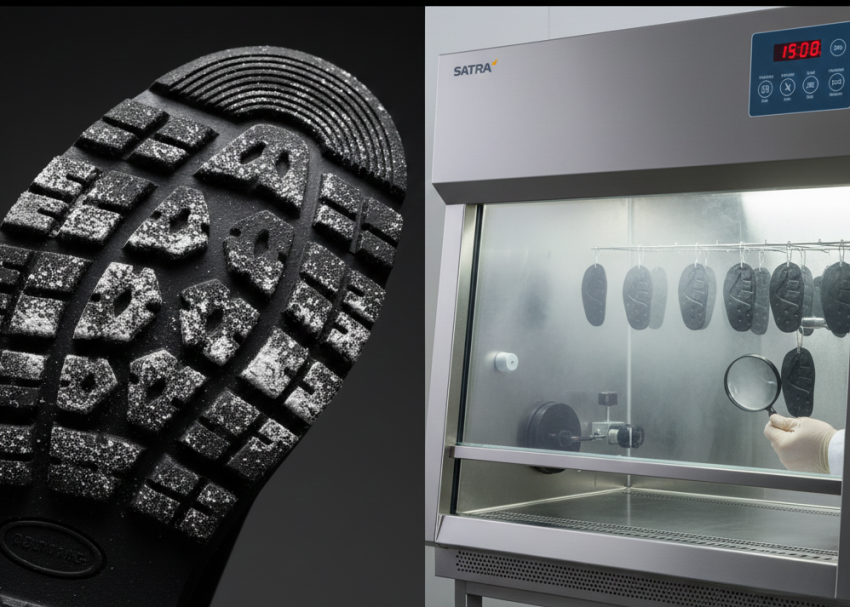
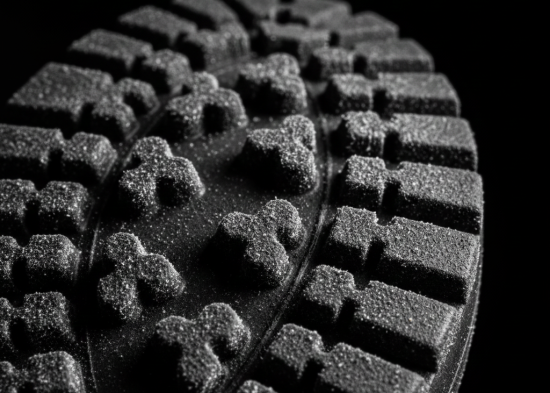
Blooming remains one of the most frequently encountered surface defects in vulcanised rubber, thermoplastic polyurethane (TPU) and thermoplastic rubber (TPR) footwear outsoles. Manifesting as a whitish or greyish film, it arises from the migration of low-molecular-weight substances to the surface. Although blooming rarely compromises mechanical performance or safety, it severely affects perceived quality, leading to customer complaints, returns and damage to brand reputation. This article examines the root causes specific to each material, established and accelerated test protocols (with emphasis on SATRA standards), and effective formulation and process strategies to eliminate or control the phenomenon.

Causes of Blooming by Material
Rubber Outsoles
- Migration of paraffin waxes, antiozonants and processing oils
- Sulphur or peroxide bloom in under-cured or over-accelerated compounds
- Oxidation products formed during prolonged exposure to heat, UV and ozone
- High humidity storage promoting water-soluble salt migration
TPU Outsoles
- Plasticiser migration (especially ester-based plasticisers)
- Incompatible stabiliser packages
- Hydrolysis of polyester-based TPU in humid conditions
- UV-induced degradation products
TPR Outsoles (SBS1/SEBS2-based)
- Excessive mineral oil or naphthenic oil migration
- Low compatibility between styrenic block copolymer and extender oils
- Residual monomers or oligomers
- Sensitivity to temperature fluctuations during storage and transport
Standard and Accelerated Test Methods
Reference: ASTM D573 / ISO 188 | Testing by Standard | Smithers
- Visual Assessment after Controlled Storage
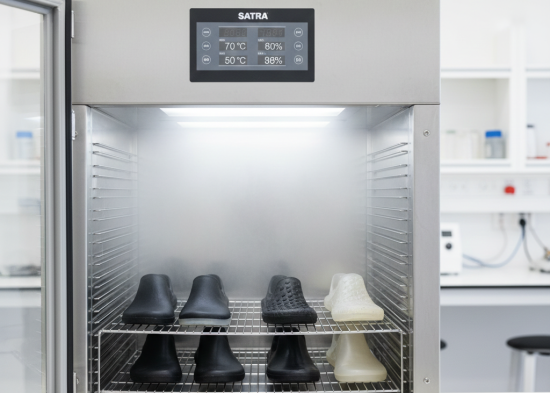
Samples stored at 23 °C ± 2 °C and 50 % ± 5 % RH for 4–12 weeks followed by visual and photographic evaluation. - Accelerated Ageing (Primary Method) – SATRA TM361:2018
Title: Bloom formation of polymeric materials
Official SATRA TM361 Standard Page
Principle: Cyclic exposure to dry heat (70 °C) and moist heat (50 °C, >95 % RH)
Duration: Typically 7–28 days with inspection every 48 h
Rating: 0 (no bloom) to 5 (severe bloom covering >75 % of surface) - UV Exposure Test
Xenon-arc or QUV3 per ISO 4892-2 or SATRA TM44 – Colour fastness to light - Heat Resistance Test – SATRA TM49
SATRA TM49 – Resistance to hot contact - Analytical Confirmation
Key SATRA Standards Relevant to Blooming Control
| Standard | Title | Primary Application |
|---|---|---|
| SATRA TM361 | Bloom formation of polymeric materials | Direct accelerated bloom prediction |
| SATRA TM401 | Accelerated ageing of footwear materials | Broader degradation including bloom |
| SATRA TM49 | Resistance to hot contact | Reveals hidden bloom under thermal stress |
| SATRA TM44 | Colour fastness to light (xenon arc) | UV-induced blooming and discoloration |
Comparative Blooming Tendency
| Material | Typical Blooming Severity (SATRA TM361, 14 days) | Most Common Migrating Substance | Relative Resistance |
|---|---|---|---|
| NR/SBR | High (Grade 4–5) | Paraffin wax, antiozonant 6PPD | Low |
| TPU | Medium (Grade 2–3) | Ester plasticiser, HALS | High |
| SEBS TPR | Medium–High (Grade 3–4) | Mineral oil, low-MW oligomers | Medium |
Industrial Solutions and Preventive Measures
- Formulation Optimisation
- Replace migratable paraffin waxes with high-molecular-weight synthetic waxes or polymer-bound waxes
- Use reactive or polymeric plasticisers in TPU
- Select high-compatibility extender oils (paraffinic >160 °C aniline point) for TPR
- Incorporate anti-blooming agents (e.g., erucamide, oleamide in controlled dosage)
- Process Control
- Ensure complete vulcanisation (rheometer t90 + 10–20 %)
- Optimise mixing sequence to maximise additive dispersion
- Apply post-cure oven treatment (60 °C × 8 h) to drive off volatiles
- Storage and Logistics
- Store finished outsoles below 30 °C and <60 % RH
- Use anti-blooming interleaving paper between stacked soles
- Surface Treatments
- Chlorination or plasma treatment to reduce surface energy and migration rate
- Application of thin PU or silicone-based anti-bloom coatings
Conclusion
Blooming in rubber, TPU and TPR outsoles is not an inevitable defect but a predictable and preventable phenomenon when proper material selection, formulation design and testing protocols are implemented. The SATRA TM361 accelerated ageing test remains the industry benchmark for screening new compounds and incoming batches. By combining compatible raw materials, validated anti-blooming additives and adherence to SATRA standards, footwear manufacturers can consistently deliver visually flawless outsoles that maintain consumer confidence throughout the product lifecycle.